
Validating Our Virtual Worlds: Understanding Model Accuracy in Computer Science
The world around us is complex, and often difficult to understand in its entirety. That’s where models come in – simplified representations of systems that help us predict behavior, test ideas, and make informed decisions. From weather forecasts to architectural blueprints, models are everywhere, but their usefulness hinges on one key factor: accuracy. In computer science, particularly for 7th graders learning the fundamentals as outlined by standard 7.DA.IM.01, understanding how to assess and validate model accuracy is a cornerstone skill for future computational thinkers.
Want a free Oklahoma CS lesson?
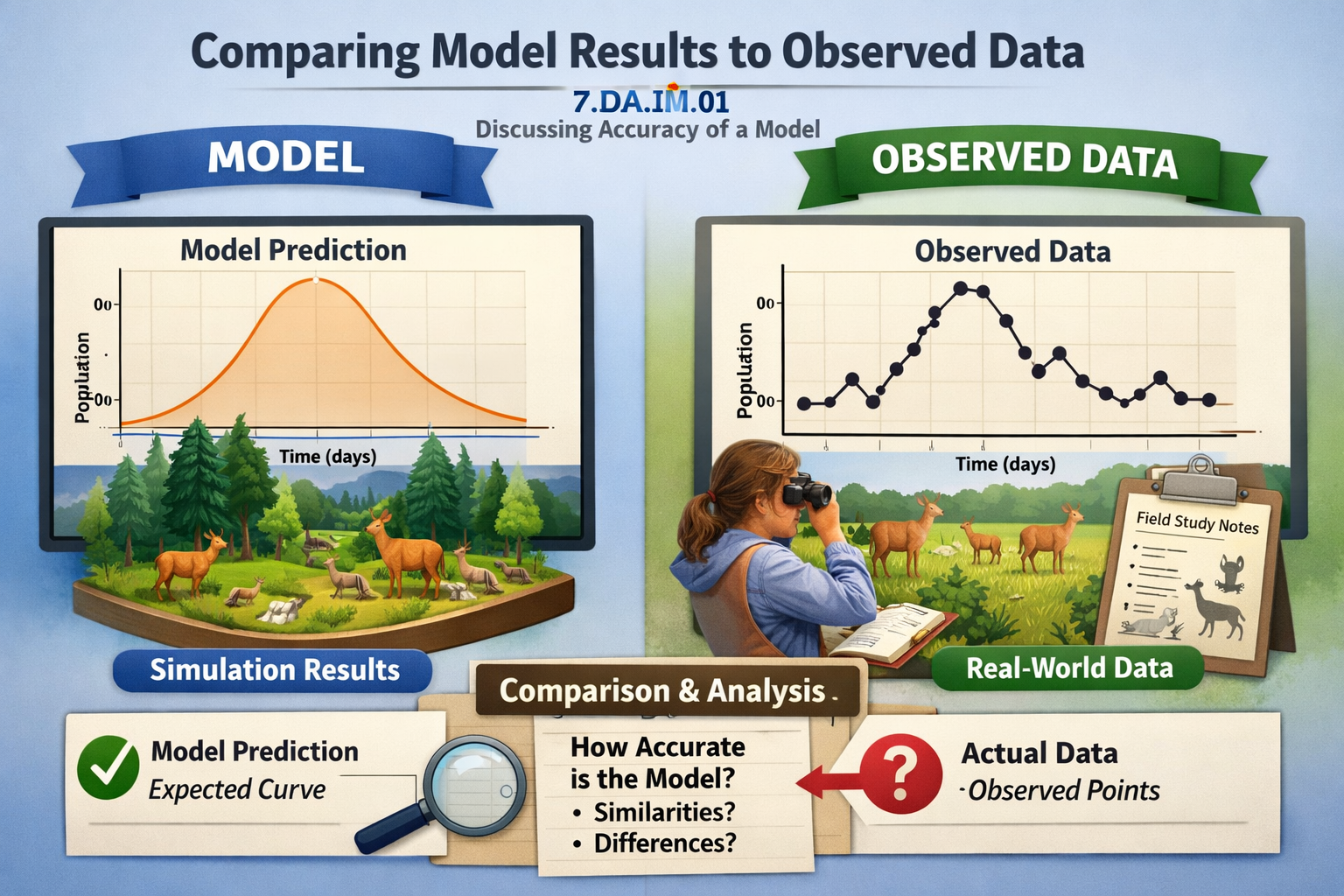
This standard specifically asks students to discuss the accuracy of a model representing a system by comparing the model’s generated results with observed data from the modeled system, setting the stage for more complex modeling endeavors later on. Accuracy isn’t just about getting the “right” answer; it’s about understanding how close the model is to reality and what that means in context.
Models aren’t perfect replicas of the systems they represent; they are simplifications designed to capture the most important aspects for a specific purpose. Think about a map – it’s a model of a geographical area, but it doesn’t include every tree or building. The map focuses on key features like roads and cities to help us navigate. Similarly, a computer model might represent the spread of a disease, focusing on population density and transmission rates while simplifying other factors like individual health habits. The level of simplification is crucial; too much simplification can lead to inaccuracies, while too little can make the model overly complex and difficult to use. Therefore, choosing what to include and exclude in a model requires careful consideration and understanding of the system being modeled. This process often involves making assumptions that need to be tested during validation.
So how do we determine if a model is “accurate enough”? The answer lies in comparing its results with real-world data – this is where validation comes into play. Validation isn’t just about checking if the model produces a result, but whether that result aligns with what we observe happening in the actual system. For example, if you build a computer model to predict the height of a plant based on sunlight exposure, you would need to grow several plants under different light conditions and measure their heights. Then, you compare those measurements to the heights predicted by your model; this comparison is the core of validation. The closer the model’s predictions are to the observed data, the more accurate we consider it to be. This process isn’t always straightforward, as real-world data often contains some degree of variation and error itself.
The concept of “observed data” is critical here; it represents the information we gather directly from the system being modeled through observation or experimentation. This data serves as our benchmark for assessing accuracy. The quality of observed data significantly impacts the validation process, so careful measurement and collection are essential. Consider a model predicting traffic flow – observed data might include vehicle counts at specific points during rush hour, average speeds on different roads, and even the number of accidents that occur. If your observed data is inaccurate or incomplete, it will be harder to determine if the model’s inaccuracies stem from the model itself or from the data used for comparison. Therefore, investing in reliable data collection methods is a key step towards effective validation.
There are several ways to quantify accuracy, depending on the type of model and the data being compared. Simple metrics include calculating the percentage error between predicted values and observed values. More sophisticated techniques involve statistical analysis, such as finding the correlation coefficient or using regression models to determine how well the model fits the data. For 7th graders exploring 7.DA.IM.01, focusing on percentage error and visual comparisons (like graphing predicted vs. observed data) can provide a solid foundation for understanding accuracy. The goal is to move beyond simply saying “the model is accurate” and instead being able to say “the model’s predictions are within X% of the actual values Y% of the time.”
It’s important to remember that accuracy isn’t always absolute; it’s often relative to the purpose of the model. A weather forecast doesn’t need to predict the temperature exactly right for every hour, but it needs to be accurate enough to help us decide whether to bring an umbrella or wear a coat. Similarly, a model predicting customer behavior might not perfectly capture everyone’s preferences, but it can still be useful for making marketing decisions. The acceptable level of accuracy depends on the context and the consequences of being wrong. A highly precise model is often desirable, but sometimes a reasonably accurate model that’s easier to understand and use is more valuable. This understanding helps students move beyond simply seeking “the right answer” and towards thinking critically about what constitutes useful information.
Furthermore, validation isn’t a one-time process; it should be ongoing throughout the life of the model. As new data becomes available or the system being modeled changes, the model needs to be re-validated to ensure its continued accuracy. For example, a model predicting population growth might need to be updated after a major migration event or a significant birth rate change. This iterative process of validation and refinement is crucial for maintaining the usefulness of the model over time. It also highlights the dynamic nature of modeling – models aren’t static representations but rather evolving tools that adapt to changing circumstances.
Sometimes, even with careful validation, a model might still have limitations or biases. These can stem from simplifying assumptions made during the modeling process, incomplete data, or inherent complexities in the system being modeled. Understanding these limitations is just as important as knowing how accurate the model is. It allows us to interpret the results cautiously and avoid over-reliance on the model’s predictions. For instance, a model predicting election outcomes might be less accurate for voters who are undecided or rarely participate in elections. Recognizing these biases helps refine future models and improve their overall performance.
In conclusion, understanding model accuracy and validation is fundamental to computer science and essential for students tackling standards like 7.DA.IM.01. By comparing a model’s results to observed data, we can assess its reliability and ensure it’s fit for purpose. It’s not just about finding the “right” answer; it’s about understanding how well our virtual worlds reflect the real one, and being able to critically evaluate the strengths and limitations of those representations. This skill will serve students well as they continue their journey in computer science and beyond, empowering them to make informed decisions based on data-driven insights.