Mastering Algorithm Design & Modification: A 7th Grade Deep Dive
Algorithms are the fundamental building blocks of computer science, acting as a set of instructions that tell a computer how to perform a specific task. They’re everywhere – from the simple steps you take to make a peanut butter sandwich to the complex calculations powering your favorite video game. For 7th grade students diving into the world of coding and computational thinking, understanding algorithms isn’t just about learning how to code; it’s about developing logical reasoning skills and problem-solving strategies that will benefit them across all disciplines. The ability to not only create an algorithm from scratch but also to effectively modify existing ones is a crucial skill for budding computer scientists, preparing them for more complex challenges in the future.
Want a free Oklahoma CS lesson?
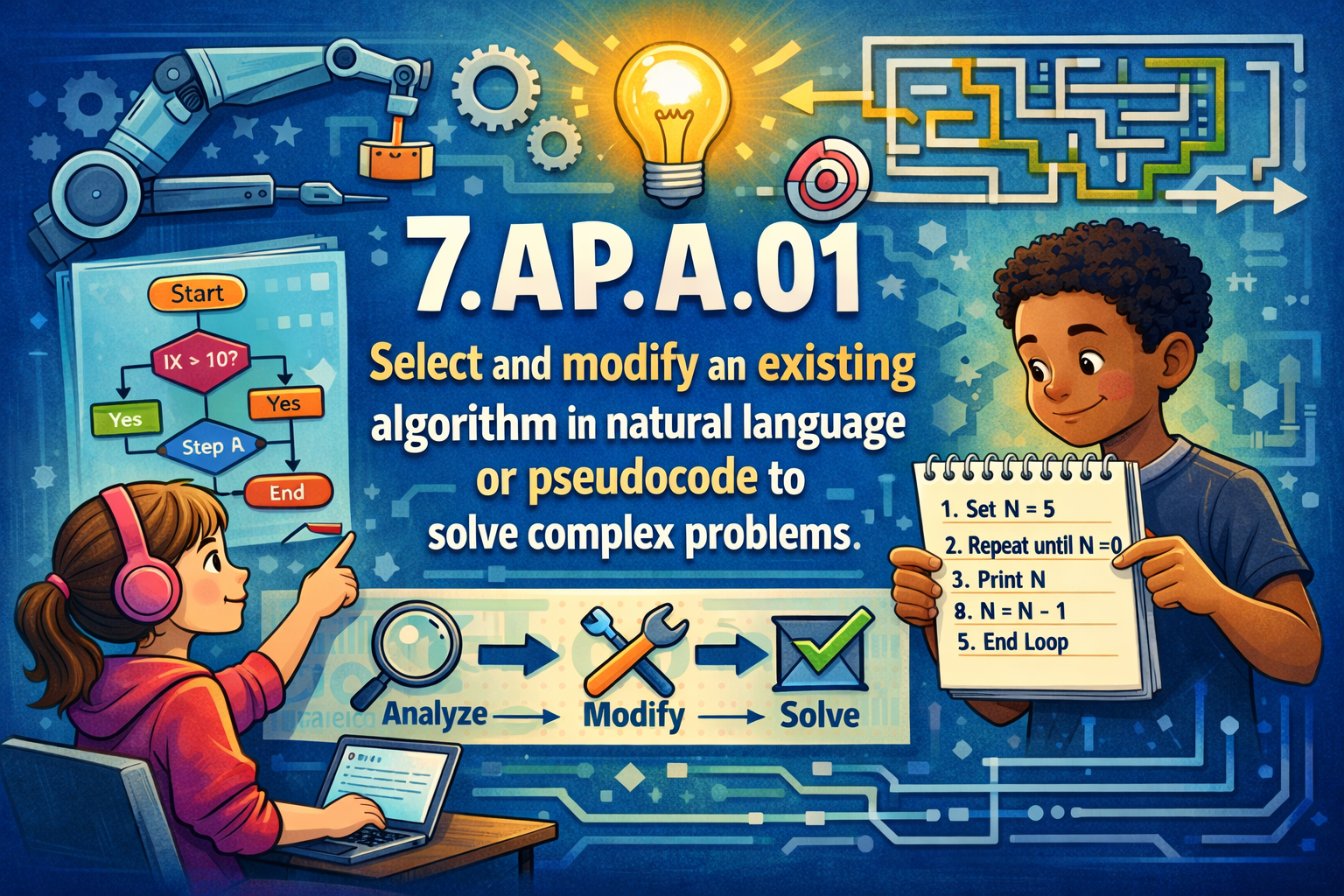
This foundational understanding allows students to move beyond simply using technology to actively creating with it, fostering innovation and creativity. The core of this lies within the OAS standard 7.AP.A.01, which focuses on selecting and modifying algorithms to tackle intricate problems.
The OAS standard 7.AP.A.01 specifically challenges students to select an existing algorithm – whether presented in natural language (like English) or pseudocode (a more code-like representation) – and then modify it to solve a complex problem. This isn’t just about making small tweaks; it requires understanding the core logic of the original algorithm, identifying areas for improvement, and implementing changes that achieve the desired outcome. A “complex problem” in this context doesn’t necessarily mean something incredibly difficult, but rather a task that requires more than a few simple steps to complete – perhaps sorting a list of items based on multiple criteria or navigating a maze with specific constraints. The key is that students demonstrate an understanding of why they are making the modifications and how those changes impact the overall functionality of the algorithm. This standard encourages critical thinking, as students must analyze the existing algorithm’s strengths and weaknesses before implementing their improvements.
Natural language algorithms are often a great starting point for 7th graders because they’re easily accessible and don’t require immediate coding knowledge. Think about writing out instructions for someone to tie a shoe – that’s an algorithm in natural language! Pseudocode, on the other hand, bridges the gap between everyday language and actual code, using more structured phrasing and keywords like “IF,” “THEN,” “ELSE,” and “REPEAT.” Both formats allow students to focus on the logic of the algorithm without getting bogged down in the syntax of a specific programming language. When selecting an existing algorithm, it’s important to choose one that is relevant to the problem at hand and provides a solid foundation for modification; starting with a well-structured algorithm makes the process less daunting. The 7th Grade Computer Science: Algorithm Design & Modification Unit on Teachers Pay Teachers provides excellent examples of both natural language and pseudocode algorithms perfect for this stage.
Modifying an algorithm isn’t always about adding new steps; sometimes it’s about rearranging existing ones to improve efficiency or clarity. Consider a simple algorithm for finding the largest number in a list: you could iterate through the list sequentially, comparing each number to the current largest, or you could use a more sophisticated sorting algorithm first. The choice depends on the size of the list and the desired level of optimization. Students should be encouraged to experiment with different modification strategies and analyze their impact on the algorithm’s performance. Understanding concepts like iteration (repeating steps) and conditional statements (making decisions based on certain conditions) are crucial for effective algorithm modification, allowing students to create more dynamic and adaptable solutions. This process also reinforces the idea that there isn’t always one “right” answer in computer science; often, multiple algorithms can solve the same problem with varying degrees of efficiency.
A common approach to modifying an algorithm is to introduce conditional statements – “IF this condition is true, THEN do this, ELSE do something else.” This allows the algorithm to adapt its behavior based on specific inputs or situations. For example, an algorithm for sorting a list of names alphabetically might need to handle cases where two names have the same first letter; a conditional statement could then compare their second letters to determine the correct order. Similarly, loops (repeating sections of code) are essential for handling lists and performing repetitive tasks efficiently. Mastering these fundamental building blocks allows students to create algorithms that can handle more complex scenarios with greater flexibility. The ability to effectively utilize both conditional statements and loops is a hallmark of a well-modified algorithm, demonstrating a deeper understanding of computational thinking principles.
Let’s consider an example: suppose you have an algorithm for calculating the area of a rectangle (length x width). To modify it to calculate the area of a triangle, you could simply divide the result by two. This seemingly small change demonstrates the core principle of algorithm modification – leveraging existing logic and adapting it to solve a related problem. Students can practice this with various algorithms, starting with simple modifications and gradually increasing the complexity. The unit provides a variety of practice problems and real-world scenarios to help students solidify their understanding. Encouraging students to explain why they made each modification is just as important as getting the correct answer, fostering deeper comprehension and analytical skills.
Debugging – finding and fixing errors in an algorithm – is an integral part of the modification process. Students will inevitably encounter bugs when modifying algorithms, and learning how to systematically identify and resolve them is a valuable skill. This often involves tracing the execution of the algorithm step-by-step, using test cases with known inputs and expected outputs. Tools like flowcharts or pseudocode can be helpful for visualizing the algorithm’s logic and identifying potential problem areas. The ability to debug effectively demonstrates not only technical proficiency but also patience and attention to detail. Furthermore, debugging encourages students to think critically about their modifications and how they impact the overall functionality of the algorithm.
When evaluating a student’s mastery of OAS standard 7.AP.A.01, look for evidence that they can clearly explain why they made specific modifications to an existing algorithm. Simply getting the correct result isn’t enough; students should be able to articulate how their changes address the complex problem and improve the algorithm’s performance or clarity. Consider asking them to compare and contrast different modification strategies, explaining the trade-offs between each approach. Providing opportunities for peer review can also be beneficial, allowing students to learn from each other’s solutions and refine their own thinking. The Teachers Pay Teachers unit offers assessment tools and rubrics to help streamline the evaluation process.
Ultimately, mastering algorithm design and modification is about developing a flexible mindset and a systematic approach to problem solving. It’s not just about learning to code; it’s about learning to think like a computer scientist – breaking down complex problems into smaller, manageable steps and designing logical solutions that can be implemented efficiently. By focusing on the core principles of algorithm selection, modification, and debugging, 7th grade students can build a strong foundation for future success in computer science and beyond. The ability to adapt existing algorithms is a crucial skill in a rapidly evolving technological landscape, allowing individuals to leverage past innovations and create new solutions to emerging challenges.