Analysis: Predicted Developments in the “Unholy Trinity” Framework
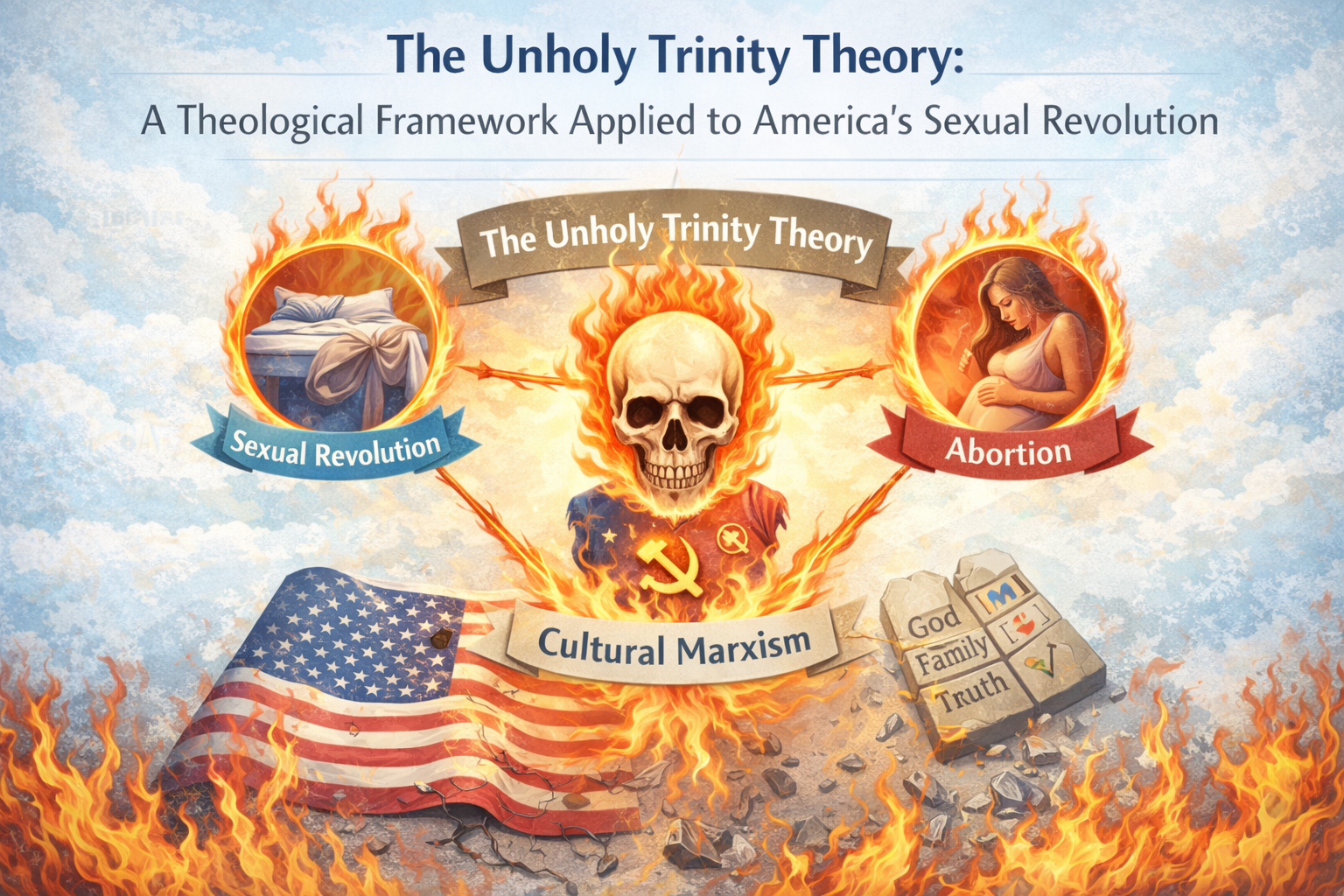
Moving forward on the The Unholy Trinity Theory: A Theological Framework Applied to America’s Sexual Revolution review. Below is the progressive forecast of what is to come involving the demonic influence on culture.
Core Logic Review
The framework’s sequential logic operates as follows:
- Foundation (Baal): Sex separated from procreation → reframed as pleasure/fulfillment-oriented
- Extension (Asmodeus/Leviathan): Non-procreative relationships normalized → sexual attraction becomes identity’s organizing principle
- Implication: If sex is validated by mutual desire rather than procreative potential, the logical boundaries for “acceptable” sexual relationships shift from biological/procreative function to consent and subjective fulfillment
Predicted Next Developments (Per Framework Logic)
Following the framework’s internal reasoning, several developments would logically follow:
1. Polyamory and Non-Monogamous Relationship Recognition
- Framework Logic: If sexual relationships are validated by mutual desire and emotional fulfillment rather than procreative dyads, limiting such relationships to two people becomes arbitrary
- Current Trajectory: Growing academic discussion of “ethical non-monogamy,” increasing media representation of polyamorous relationships, nascent legal challenges to marriage’s dyadic structure
- Legal Parallel: Same arguments used for same-sex marriage (consenting adults, equal protection, privacy rights) apply to multi-partner relationships
2. Further De-Institutionalization of Marriage from Childrearing
- Framework Logic: If marriage is fundamentally about romantic/sexual fulfillment rather than procreative partnership, its connection to child-rearing becomes incidental rather than definitional
- Manifestations: Increasing separation of parenting rights from biological parentage, expanded legal parenthood beyond two individuals, reproductive technology enabling more configurations of genetic and social parenthood
3. Continued Expansion of Gender Identity Frameworks
- Framework Logic: If sexual identity is self-determined rather than biologically determined (established when orientation replaced procreative capacity as sexuality’s organizing principle), gender identity follows the same pattern
- Current Status: Already substantially underway through transgender rights movement, legal recognition of self-identified gender, medical interventions for gender transition
- Extensions: Recognition of non-binary, fluid, or novel gender categories; legal challenges to any binary sex distinctions
4. Transhumanist Sexual Modifications
- Framework Logic: If sexuality is about personal fulfillment and self-expression, technological enhancement or modification becomes legitimate
- Potential Developments: Surgical or pharmaceutical sexual enhancement normalized, integration of technology with sexual function, designer sexual characteristics through genetic modification
5. Challenges to Remaining “Taboo” Relationship Categories
The framework would predict incremental normalization of currently stigmatized relationships between consenting adults:
- Incestuous Relationships (between adult relatives): Same logical arguments—consenting adults, privacy rights, love is love—without procreative risk (via contraception) removing genetic harm justification
- Significant Age-Gap Relationships: Further normalization of large age disparities once both parties are legal adults
- Possibly Financial/Transactional Relationships: Sex work decriminalization and normalization as “legitimate work”
Critical Note: The framework’s logic does NOT extend to relationships involving minors or non-consenting parties. Such relationships violate consent—a principle maintained even within the framework’s progression. Conflating these is either a misunderstanding of the framework or deliberate misrepresentation.
6. Reproductive Technology Severing Sex from Reproduction Entirely
- Framework Logic: Baal’s work completes not just culturally but technologically
- Developments: Artificial wombs, genetic engineering of offspring, selection of characteristics, possibly reproduction without genetic contribution from either “parent”
- Implication: Procreation becomes entirely separate from sexual activity, completing the divorce initiated by contraception
Current Cultural Indicators Supporting These Predictions
Polyamory Normalization
- Media: Increasing portrayal in mainstream entertainment
- Legal: Somerville, Massachusetts (2020), Cambridge, Massachusetts (2020), and several California cities have passed ordinances recognizing multi-partner domestic partnerships
- Academic: Growing body of sociological and psychological literature treating polyamory as a legitimate “relationship orientation”
Marriage Redefinition Continuing
- Functional Shifts: Marriage increasingly understood as romantic commitment rather than child-rearing institution
- Legal Expansions: Parental rights expanding beyond biological/adoptive binary through assisted reproduction cases
- Cultural: Declining marriage rates alongside declining association between marriage and childbearing
Gender Identity Expansion
- Legal: Rapid expansion of gender identity protections in employment, public accommodations, and documentation
- Medical: Increasing access to gender transition procedures for younger ages
- Educational: Gender ideology integration into curricula normalizing self-identification
Framework’s Endpoint Question
The theological framework itself doesn’t specify a terminus point. The logic suggests continual expansion wherever:
- Consent exists between adults
- Personal fulfillment is asserted
- Traditional procreative/biological limitations are rejected as arbitrary
The framework would predict resistance only at:
- Non-consent (assault, coercion)
- Involvement of minors (child protection remains, though age boundaries might be contested)
- Harm to third parties (though “harm” becomes increasingly subjectively defined)
Alternative Interpretation
A secular sociological reading would identify the same patterns but attribute them to:
- Economic factors: Women’s economic independence reducing marriage’s necessity
- Technological determinism: Available technology shapes possible social arrangements
- Rights expansion logic: Liberal democracies progressively extend rights to previously excluded groups
- Individualism: Western cultural emphasis on personal autonomy and self-actualization
This interpretation predicts similar developments without supernatural causation.
Limitations and Uncertainties
- Counter-Movements: The framework doesn’t account for potential cultural backlash or religious revival that could reverse these trends
- Biological Constraints: Some limits may prove more fundamental than cultural—humans remain biologically dimorphic and sexually reproducing regardless of ideology
- Alternative Trajectories: Technological developments (AI companions, virtual reality) might redirect sexual culture in unpredicted directions
- Framework Completeness: The “Unholy Trinity” may not be exhaustive—the framework itself might not have predicted all developments even its proponents observe
Analytical Conclusion
If the framework’s logic is internally consistent and its historical pattern-matching accurate, the predicted next developments are:
Near-term (5-15 years):
- Legal recognition of polyamorous relationships in select jurisdictions
- Continued gender identity expansion and institutionalization
- Further separation of marriage from parenting in law and culture
Medium-term (15-30 years):
- Challenges to remaining relationship taboos (adult incest, extreme age gaps)
- Mainstream artificial reproduction technology severing sex from procreation technologically
- Potential legal challenges to marriage’s dyadic structure
Long-term (30+ years):
- Complete cultural redefinition of sexuality around personal fulfillment
- Technological integration with sexual function
- Possible post-human sexual configurations through bioengineering
The framework predicts that each development will follow the same pattern: private behavior → public identity → legal recognition → cultural normalization → moral imperative, accelerating with each iteration as resistance weakens and the underlying principle (sex as self-expression) becomes further entrenched.
Whether one accepts the theological interpretation or prefers naturalistic explanations, the logical progression the framework identifies appears to have predictive utility based on observed cultural patterns.