
Washington Court Rules Flock Camera Surveillance Data Must Be Public: Cities Deactivate Systems Amid Privacy Controversy
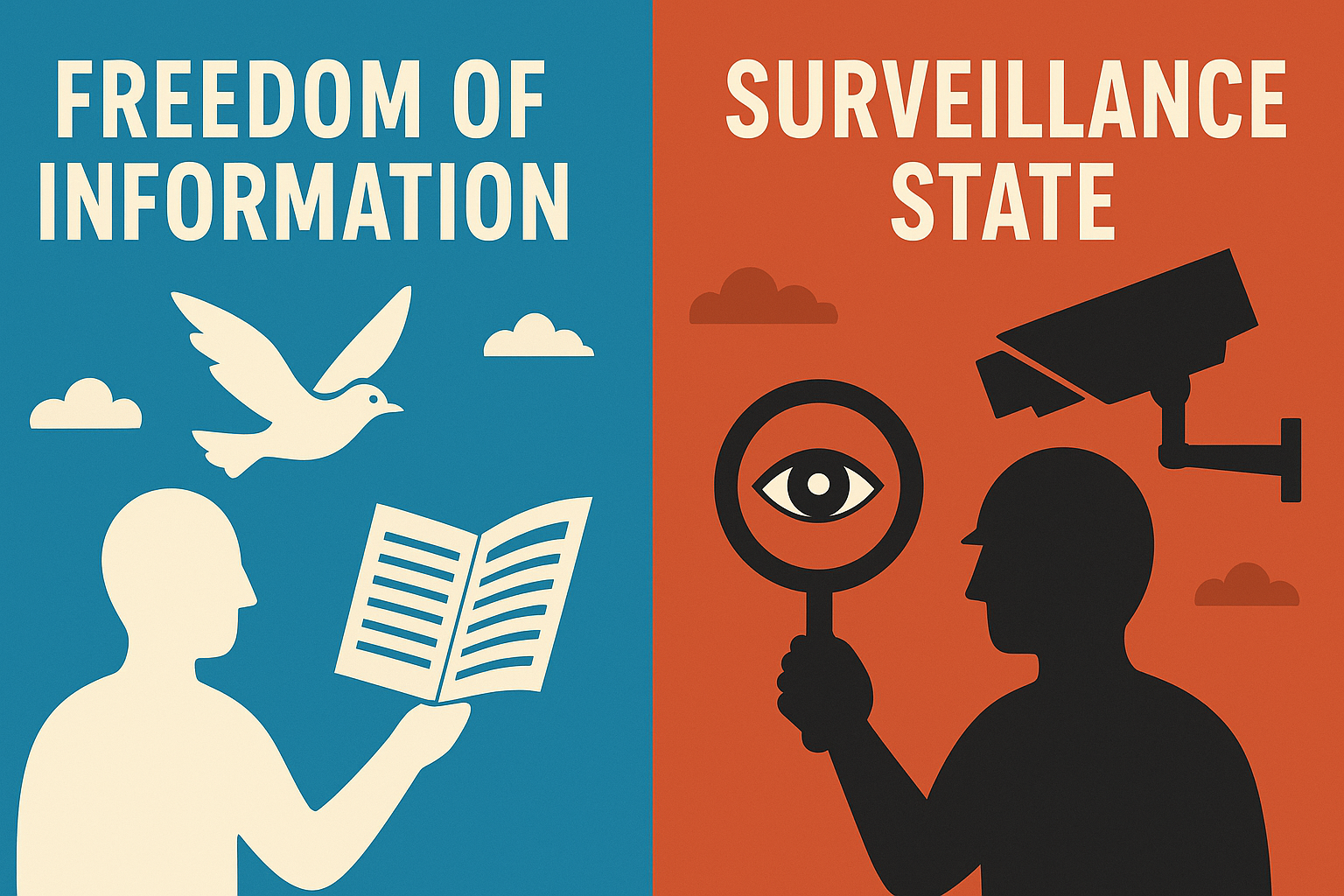
On November 7, 2025, Judge Elizabeth Neidzwski of Skagit County Superior Court in Washington state issued a landmark ruling that has sent shockwaves through law enforcement agencies across the Pacific Northwest. HeraldNet.comKing 5 The judge determined that images and data captured by Flock Safety automated license plate reader (ALPR) cameras qualify as public records under Washington’s Public Records Act, effectively granting citizens access to surveillance footage collected by their own tax dollars. King 5 The decision represents a significant legal development in the ongoing national debate over surveillance technology, government transparency, and individual privacy rights in public spaces. In immediate response to the ruling, both cities of Sedro-Woolley and Stanwood deactivated their Flock camera systems entirely, citing concerns about the privacy implications of releasing the footage to the public. HeraldNet.comKing 5 The case has attracted widespread attention from civil liberties advocates, law enforcement agencies, and municipalities throughout Washington state and beyond, as the implications of this decision could fundamentally reshape how surveillance technology is deployed and managed. Multiple other Washington cities that had been considering or delaying Flock camera installations have now placed their decisions on hold pending further legal developments. HeraldNet.com This ruling crystallizes a fundamental paradox: if surveillance footage is deemed too privacy-invasive to release publicly, can its collection by government agencies be justified in the first place?
The legal controversy began when Jose Rodriguez, an Oregon resident who works in Walla Walla, Washington, filed public records requests with dozens of Washington police agencies seeking access to images captured by Flock Safety cameras installed in their jurisdictions. King 5 Rodriguez, a tattoo artist who describes himself as an ordinary citizen concerned about government overreach, specifically requested images from Flock cameras operated by Stanwood and Sedro-Woolley police departments during specific time periods. According to court documents, Rodriguez requested images from Stanwood’s cameras captured between 5 and 6 p.m. on a particular date, demonstrating the precision with which citizens can now potentially access surveillance data. goskagit.com Many police agencies that received Rodriguez’s requests initially complied, providing records that revealed the cameras photograph all passing vehicles indiscriminately, regardless of whether those vehicles or their occupants are suspected of any criminal activity. King 5 The scope of this indiscriminate surveillance became central to the legal dispute and ultimately to the judge’s decision. Rather than simply providing the requested records, the cities of Sedro-Woolley and Stanwood took the unusual step of filing civil lawsuits against Rodriguez, seeking a declaratory judgment that would exempt Flock camera data from the Public Records Act entirely. King 5goskagit.com The cities argued that these images should either not be classified as public records at all, or if they were public records, they should be exempt from disclosure due to privacy concerns and their classification as intelligence information.
Flock Safety cameras are sophisticated surveillance devices mounted along public roadways that continuously photograph passing vehicles and their occupants, ostensibly to help law enforcement identify stolen cars or vehicles connected to crimes. King 5 The technology extends far beyond simple license plate recognition, employing artificial intelligence to analyze and categorize vehicle characteristics in granular detail. Attorney Tim Hall, representing Rodriguez, noted that Flock’s software is capable of identifying vehicles through make, model, color, bumper stickers, dents, roof racks, bike racks, and other distinguishing features. King 5 This comprehensive data collection occurs automatically and continuously, creating detailed movement logs of every vehicle that passes within the camera’s field of view. According to Flock Safety’s own policies, the company maintains this data for 30 days before deletion, though this retention period can be extended for ongoing investigations. goskagit.com The cameras operate 24 hours per day, seven days per week, capturing not just license plates but also clear images of vehicle occupants’ faces. When KING 5 news reviewed dozens of photos taken by Flock surveillance cameras in Newcastle, Washington on September 16, they found that the images clearly showed the faces and license plates of everyday drivers, none of whom were suspected of any crimes. King 5 The television station was compelled to blur faces and license plates in their broadcast report to protect the privacy of the individuals captured, illustrating the invasive nature of the footage.
In her ruling, Judge Neidzwski found that the scope of Flock surveillance was “so broad and indiscriminate” — with most images capturing people not suspected of any crime — that the data must be released under Washington’s public records law. King 5 The judge’s decision rested on fundamental principles of government transparency and accountability embedded in the Public Records Act. Judge Neidzwski specifically stated that “the Flock data do qualify as public records subject to the Public Records Act,” rejecting the cities’ arguments for exemption. King 5 The ruling emphasized that when government agencies use public funds to collect data about citizens, those citizens maintain a right to access that information under established transparency statutes. However, the judge also carefully limited the scope of her ruling, stating that it addressed only the public records issue and did not resolve other controversies surrounding automated license plate readers, including their constitutional implications or appropriate use policies. The decision creates a framework where surveillance data collected by government agencies becomes subject to the same disclosure requirements as other government records, from meeting minutes to budget documents. This transparency requirement fundamentally alters the calculus for municipalities considering surveillance technology deployment, as they must now weigh not only the law enforcement benefits but also the administrative burden and privacy implications of making all captured data potentially available to any requester.
The cities of Sedro-Woolley and Stanwood advanced several arguments in their effort to shield Flock camera data from public disclosure, centering primarily on privacy concerns and the nature of the information as intelligence data. According to court filings, the cities sought a declaratory judgment that the data and images were not public records under the state Public Records Act, and alternatively, if they were public records, they should be exempt from public disclosure as contrary to public policy and exempt as specific intelligence information. goskagit.com Emily Guildner, an attorney representing both cities, argued during the November 7 hearing that classifying these records as publicly accessible could have “compounding effects” on public safety and individual privacy. The cities contended that releasing surveillance images would expose innocent citizens to potential harm from stalkers, abusive ex-partners, or other malicious actors who could use the location data to track individuals’ movements. They also argued that public disclosure would undermine the investigative value of the cameras by alerting criminals to the surveillance network’s capabilities and coverage areas. The fundamental irony in these arguments — that images are simultaneously not private enough to restrict their collection but too private to allow public access — became a focal point of the legal dispute. Law enforcement agencies asserted that they access Flock data only during active investigations, such as missing persons cases or vehicle theft investigations, and that broader public access would compromise these legitimate law enforcement functions.
Rodriguez articulated the perspective of many privacy advocates when he stated, “I felt like that’s violating my privacy, everyone’s privacy, regardless if you are obeying the law. It’s not like they are a traffic light camera that takes picture of all the people that are breaking the law by speeding or whatever. It’s taking pictures of every single vehicle that passes by.” King 5 This distinction between targeted enforcement cameras and mass surveillance systems lies at the heart of the controversy. Traditional traffic enforcement cameras photograph only vehicles that trigger the system by running a red light or exceeding speed limits, creating a reasonable nexus between the surveillance and specific law violations. In contrast, Flock cameras operate on a fundamentally different principle, photographing every passing vehicle continuously without any requirement for reasonable suspicion or probable cause. King 5 This creates a comprehensive database of vehicle movements that effectively maps the routine travel patterns of law-abiding citizens. Civil liberties organizations have long warned about the risks of such dragnet surveillance, arguing that it creates detailed profiles of individuals’ daily activities, associations, and habits. The technology enables law enforcement to retroactively investigate anyone’s movements after the fact, inverting the traditional investigative process where surveillance follows suspicion rather than preceding it. Furthermore, the permanent nature of these records — even if held for only 30 days — creates opportunities for misuse, unauthorized access, or data breaches that could expose sensitive location information about vulnerable populations.
The Skagit County ruling comes in the wake of serious revelations about unauthorized federal access to Washington state’s Flock camera networks, adding urgency to questions about oversight and control of surveillance data. University of Washington In October 2025, researchers at the University of Washington Center for Human Rights released a comprehensive report revealing that records obtained via public records requests showed at least eight Washington state law enforcement agencies had enabled direct sharing of their Flock networks with U.S. Border Patrol at some point during 2025. University of Washington This finding is particularly significant because Washington state law prohibits the use of surveillance systems for civil immigration enforcement purposes, meaning these data-sharing arrangements may have violated state law. The university researchers also discovered evidence of “back door” access by U.S. Border Patrol to the networks of at least ten Washington police departments that had not explicitly authorized such sharing, raising questions about how federal agencies gained access to local surveillance systems. University of Washington The report documented “side door” searches where law enforcement agencies in Washington state conducted searches on behalf of Immigration and Customs Enforcement (ICE), with officers typing descriptors like “ICE” or “illegal immigration” in the required reason fields. University of WashingtonHeraldNet.com Perhaps most alarmingly, the research revealed that a Texas law enforcement agency had conducted nationwide searches of Flock networks — including systems operated by Yakima and Prosser, Washington — seeking to track a woman who had self-administered an abortion, with search logs showing the reason as “had an abortion, search for female.” University of Washington These revelations demonstrate that once surveillance data is collected, controlling its access and use becomes extremely difficult, even across state lines and in apparent violation of state laws protecting reproductive rights and limiting immigration enforcement activities.
Following the judge’s November 7 ruling and the revelations about federal access, multiple Washington municipalities have either deactivated their Flock camera systems or delayed implementation of planned installations. HeraldNet.comHeraldNet.com Mountlake Terrace delayed installing Flock cameras until the “current legal situation sorts itself out,” according to City Manager Jeff Niten, despite the City Council having approved a contract with Flock Safety in June 2025. HeraldNet.com In May 2025, Stanwood decided to pause its cameras pending the court’s decision on the public records matter, even though the city had approved a $92,000 contract with Flock Safety in November 2024 and the cameras had been operating for approximately four months. HeraldNet.com Lake Stevens disabled its nationwide lookup feature in July 2025 after discovering that agencies in Eastern Washington were accessing its network, contrary to the department’s intention to share data only with agencies in Western Washington. HeraldNet.com Mill Creek turned off nationwide lookup on October 1, 2025, two days after its cameras went live, and subsequently restricted its network access to Snohomish County agencies only on November 4. HeraldNet.com Lynnwood Police Chief Cole Langdon reported that his department disabled the nationwide lookup feature nine days after cameras became operational, after realizing out-of-state agencies were accessing the network and being advised by Flock that continued nationwide access would create a “reciprocal, two-way street.” HeraldNet.com The town of Woodway delayed its vote to approve a Flock contract entirely, awaiting the outcome of the declaratory judgment case. HeraldNet.com These rapid responses indicate that municipalities are reassessing both the legal viability and practical wisdom of deploying surveillance technology that may expose them to extensive public records requests and compliance burdens.
The implications of Judge Neidzwski’s ruling extend far beyond the borders of Skagit County or even Washington state, potentially establishing precedent that could influence surveillance policy nationwide. The decision could affect dozens of Washington police departments currently using Flock technology, as well as the thousands of municipalities across the United States that have deployed similar systems. HeraldNet.comKing 5 Atlanta-based Flock Safety, which began as a startup in 2017, now operates more than 80,000 solar-powered cameras in over 6,000 communities throughout the country, making it one of the largest vendors of automated license plate readers in the United States. HeraldNet.com If other courts adopt similar reasoning — that government surveillance data constitutes public records accessible under transparency statutes — the operational model for these systems could become untenable due to the administrative burden of processing disclosure requests. The ruling creates a natural check on surveillance expansion: agencies must balance the investigative value of mass data collection against the costs and privacy implications of making that data publicly accessible. From a policy perspective, the decision forces a more honest conversation about surveillance technology by eliminating the asymmetry where only government agencies could access comprehensive movement data. If surveillance footage is genuinely collected for public safety purposes using public funds, the argument for public accessibility becomes difficult to refute. However, the ruling also highlights a potential vulnerability: if the data truly does contain sensitive information that could facilitate stalking, harassment, or other criminal activity when publicly released, then perhaps such indiscriminate collection should not occur in the first place. The attorneys for Sedro-Woolley and Stanwood have stated they will evaluate the decision before determining whether to appeal, but the precedent has already catalyzed a regional reevaluation of surveillance practices.
The Skagit County case illustrates a fundamental tension in modern governance between security, transparency, and privacy that will only intensify as surveillance technology becomes more sophisticated and ubiquitous. The case follows mounting concerns about Flock Safety systems that crystallized after media revelations in May 2025 about local police performing searches on behalf of ICE and the Texas abortion-tracking incident. King 5 Despite these controversies, some law enforcement agencies report significant operational benefits from the technology, with Everett, Washington reporting that stolen vehicles per month in 2025 decreased 67% from the city’s previous three-year average, with Flock assisting in 183 arrests, 95 vehicle recoveries, and 386 investigative assists between September 2024 and August 2025. HeraldNet.com This creates a difficult policy calculus: the technology demonstrably aids law enforcement in vehicle recovery and criminal investigations, but the same capabilities that make it effective also make it invasive and subject to misuse. The Rodriguez case reveals that transparency itself can serve as a limiting principle on surveillance — if agencies must make their data collection accessible to the public, they may naturally constrain collection to genuinely necessary activities rather than maximalist dragnet surveillance. Whether this represents a sustainable equilibrium or merely a temporary impediment to surveillance expansion remains to be seen. What is clear is that citizens, courts, and legislatures will continue grappling with these fundamental questions about the appropriate balance between collective security and individual privacy in an era of ubiquitous digital surveillance.