The De-identification Paradox: Why AI’s Growing Power Makes True Medical Privacy Impossible
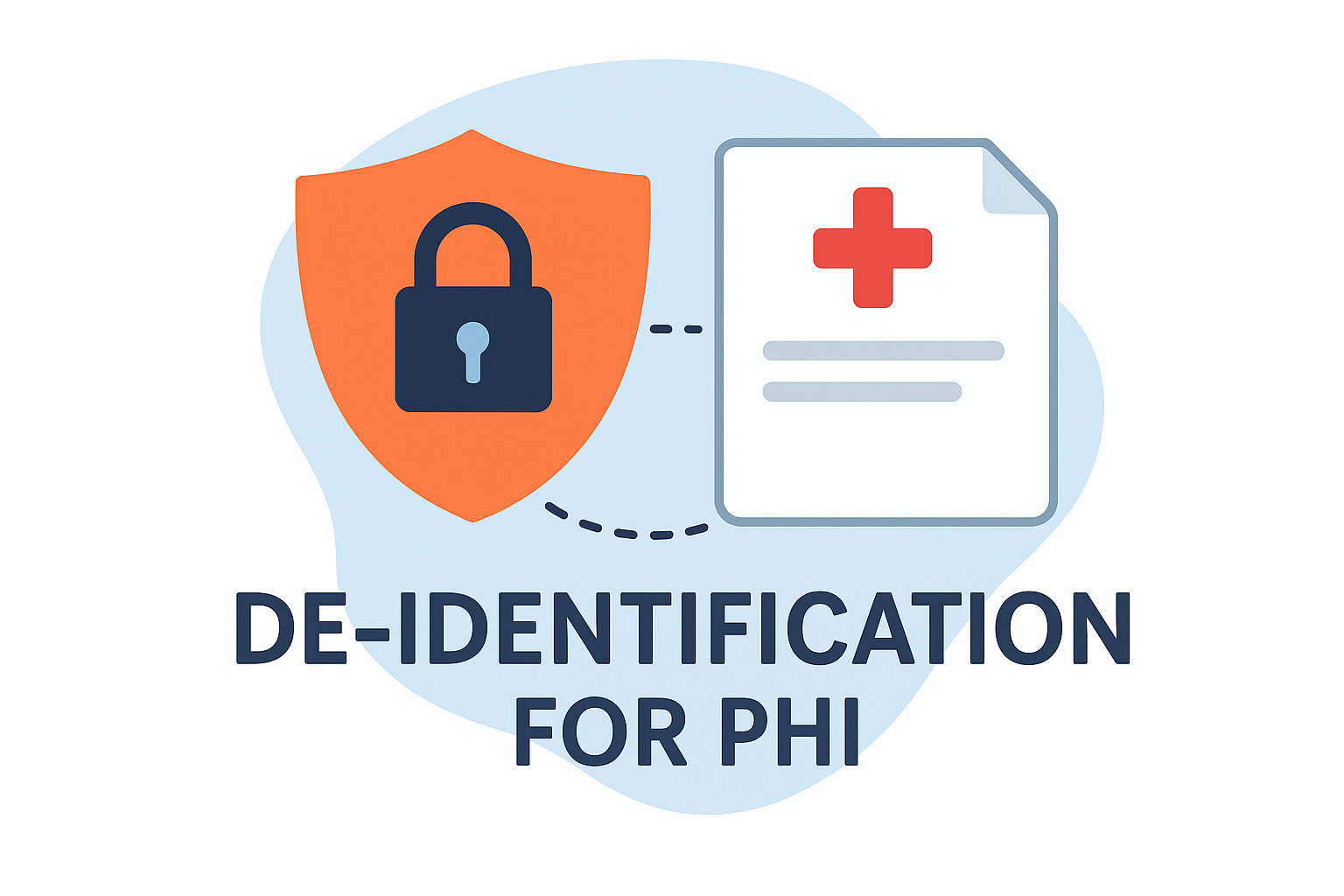
The uncomfortable truth about protected health information de-identification in 2025 is that we are witnessing the slow collapse of a privacy protection paradigm that was never designed to withstand the analytical power of modern artificial intelligence. Current AI technology has created an unprecedented paradox where the same systems designed to protect patient privacy through sophisticated de-identification are simultaneously making re-identification easier than ever before, with success rates of traditional privacy protection methods declining at an alarming rate. Healthcare institutions continue to invest billions in de-identification technologies, clinging to regulatory frameworks and compliance checkboxes while the fundamental assumption underlying these efforts—that data can be permanently and irreversibly anonymized—crumbles under the weight of technological reality. The most advanced de-identification systems available today, powered by transformer models and deep learning architectures, achieve what appears to be impressive accuracy rates on paper, often exceeding 97% for standard PHI elements. However, this metric itself is becoming increasingly meaningless as the definition of what constitutes identifying information expands exponentially with each advancement in AI capabilities. The same natural language processing models that can identify and redact patient names from clinical notes can also infer those names from writing patterns, treatment sequences, and contextual clues that no current de-identification system even attempts to address. We are rapidly approaching a tipping point where the very concept of de-identification becomes not just difficult or expensive, but fundamentally impossible in any meaningful sense.
The exponential growth in AI’s pattern recognition capabilities has transformed every piece of medical data into a potential identifier, rendering traditional concepts of PHI obsolete and exposing the futility of current de-identification approaches. Modern machine learning models can extract identifying patterns from data points that regulators never imagined could be problematic, including typing cadences in electronic health records, specific word choices in clinical narratives, and even the sequence of diagnostic codes entered during a patient encounter. Research has demonstrated that AI models can identify individuals from anonymized medical imaging with startling accuracy, recognizing unique anatomical features that serve as biological fingerprints invisible to human observers. The temporal patterns in healthcare utilization, once considered safe after date shifting and generalization, now serve as unique signatures that machine learning algorithms can match across datasets with increasing precision. Large language models trained on vast corpora of text can identify writing styles of specific physicians, potentially linking anonymous case reports to their authors and, by extension, to their patients. The proliferation of multimodal AI systems that can process text, images, structured data, and time series simultaneously has created unprecedented opportunities for re-identification through data fusion. Even more concerning is the emergence of AI systems that can infer missing data points, filling in the gaps left by de-identification processes through probabilistic reasoning and pattern matching. The success rate of de-identification is not just declining; it is approaching zero when faced with adversarial AI systems specifically designed to pierce the veil of anonymization.
The accelerating decline in de-identification effectiveness follows a predictable but alarming trajectory driven by the fundamental asymmetry between privacy protection and privacy invasion technologies. While de-identification systems must successfully remove or obscure every potential identifier to succeed, re-identification attacks need only find a single vulnerability to compromise an entire dataset, creating an inherently unwinnable arms race. The computational resources required for re-identification have plummeted as cloud computing and pre-trained models democratize access to powerful AI capabilities, enabling even modest research teams or malicious actors to mount sophisticated attacks. Academic studies have shown that each doubling of model parameters in large language models corresponds to a measurable increase in the ability to infer protected information from supposedly de-identified text, suggesting that future AI systems will only become more capable of breaking through current privacy protections. The integration of external data sources, including social media, public records, and commercial databases, provides an ever-expanding attack surface that de-identification processes cannot possibly account for. Machine learning models can now identify statistical anomalies and unique patterns in aggregated data that reveal individual-level information, fundamentally undermining the assumption that aggregation provides privacy protection. The feedback loop between AI advancement and re-identification capability means that every improvement in machine learning technology directly translates to a degradation in the effectiveness of existing de-identification methods. This decline is not linear but exponential, with each breakthrough in AI research opening multiple new avenues for compromising patient privacy.
Current AI technology has reached a sophistication level where it can reconstruct complete medical profiles from fragments of de-identified data, demonstrating that traditional privacy protection methods are not merely inadequate but fundamentally flawed. State-of-the-art neural networks can perform what researchers call “jigsaw re-identification,” piecing together scattered fragments of information across multiple datasets to reconstruct complete patient identities with remarkable accuracy. Generative AI models can now create synthetic medical records that, when compared with de-identified real records, can identify matching patterns and reveal the original data through statistical inference. The ability of modern AI to understand context and meaning rather than just pattern matching means that even heavily redacted documents can leak significant information through the remaining text’s semantic content. Advanced models can detect subtle correlations between seemingly unrelated variables, identifying unique combinations that serve as quasi-identifiers more effectively than traditional demographic variables. The emergence of few-shot and zero-shot learning capabilities means that AI systems can identify individuals from medical data without ever being explicitly trained on re-identification tasks, simply by understanding the underlying patterns in human health data. Federated learning systems, initially designed to protect privacy by keeping data distributed, have been shown vulnerable to model inversion attacks where the trained model itself becomes a vector for extracting protected information. The convergence of multiple AI technologies—natural language processing, computer vision, time series analysis, and graph neural networks—creates a perfect storm where every aspect of medical data becomes a potential vulnerability.
The healthcare industry’s continued reliance on de-identification represents a dangerous form of security theater that provides false assurance while failing to address the fundamental impossibility of maintaining privacy in an AI-saturated world. Hospitals and research institutions continue to invest millions in de-identification software and processes, not because these methods provide real privacy protection, but because they satisfy regulatory checkboxes and create legal safe harbors that shift liability away from data controllers. The HIPAA Safe Harbor method, still widely used despite being designed before the advent of modern AI, exemplifies how regulatory frameworks lag decades behind technological reality, creating a compliance culture that prioritizes procedural adherence over actual privacy protection. Healthcare organizations often treat de-identification as a one-time process rather than recognizing that data which appears safely anonymized today may become identifiable tomorrow as AI capabilities advance. The economic incentives in healthcare data markets encourage minimal compliance rather than robust privacy protection, with data brokers and analytics companies profiting from the gap between regulatory requirements and actual privacy risks. Insurance companies, pharmaceutical firms, and technology companies accumulate vast repositories of supposedly de-identified health data, creating honeypots that become increasingly vulnerable as re-identification techniques improve. The certification and audit processes for de-identification systems focus on current capabilities rather than future-proofing against advancing AI, ensuring that today’s compliant systems become tomorrow’s privacy breaches. This theatrical approach to privacy protection diverts resources from more promising privacy-preserving technologies while maintaining an illusion of safety that prevents meaningful reform.
The mathematical and theoretical foundations of information theory suggest that perfect de-identification is not just practically difficult but theoretically impossible when facing sufficiently advanced artificial intelligence systems. Information theory demonstrates that any dataset containing useful information about individuals necessarily contains some degree of identifying information, creating an inherent trade-off between utility and privacy that cannot be eliminated through technical means alone. The concept of k-anonymity, l-diversity, and other privacy metrics developed in the pre-AI era assume limited computational capabilities and access to auxiliary information, assumptions that no longer hold in a world where AI can process vast amounts of data and identify subtle patterns. Differential privacy, while providing mathematical guarantees about privacy loss, requires adding noise that often renders medical data unusable for clinical research or precision medicine applications, forcing an impossible choice between privacy and medical advancement. The curse of dimensionality in health data means that as medical records become more detailed and comprehensive, they become exponentially easier to re-identify, regardless of which fields are removed or obscured. Quantum computing advances threaten to further accelerate the breakdown of de-identification by enabling pattern matching and optimization problems that are currently computationally infeasible. The emergence of neurosymbolic AI that combines neural networks with symbolic reasoning creates systems that can not only identify patterns but also explain and reason about them, making it easier to construct re-identification attacks. The fundamental problem is that human health is inherently unique and identifying; no amount of technological sophistication can change the biological reality that each person’s medical history forms a unique fingerprint.
Real-world breaches and re-identification incidents are already demonstrating the catastrophic failure of current de-identification practices, though many incidents go unreported due to liability concerns and the difficulty of detecting sophisticated AI-driven attacks. Researchers have successfully re-identified individuals in numerous supposedly anonymous datasets, including genomic databases, clinical trial data, and population health studies, often achieving re-identification rates exceeding 90% with modern AI techniques. The infamous Netflix Prize dataset de-anonymization and the re-identification of individuals in anonymized taxi trip data were early warnings that have gone largely unheeded by the healthcare industry, which continues to believe its data is somehow different or more protected. Insurance companies are already using AI to identify individuals from de-identified data to assess risk and deny coverage, though they carefully avoid acknowledging these practices to prevent regulatory scrutiny. State-sponsored actors and criminal organizations have developed sophisticated AI systems specifically designed to re-identify medical data for espionage, blackmail, and targeted attacks on individuals with specific health conditions. The secondary use of de-identified data in commercial applications, including pharmaceutical marketing and clinical decision support systems, creates additional attack surfaces where privacy breaches can occur without the original data controller’s knowledge. The interconnected nature of modern healthcare systems means that a breach in one de-identified dataset can cascade across multiple organizations, as re-identified information is used to compromise additional supposedly anonymous databases. The true scope of the problem remains hidden because successful re-identification attacks are often undetectable, leaving victims unaware that their medical privacy has been compromised.
The implications of de-identification’s failure extend far beyond individual privacy concerns, threatening to undermine the entire foundation of medical research, public health surveillance, and evidence-based medicine. Researchers face an impossible dilemma where they must choose between using properly de-identified data that lacks the detail necessary for meaningful analysis or using detailed data that cannot be adequately protected from re-identification. The erosion of public trust in medical data privacy could lead to widespread reluctance to participate in clinical trials, genomic studies, and population health initiatives, potentially setting back medical progress by decades. Healthcare organizations may face massive liability as courts begin to recognize that standard de-identification practices no longer provide adequate privacy protection, potentially leading to a tsunami of litigation. The development of precision medicine and AI-driven diagnostic tools depends on access to large, detailed medical datasets that cannot be both useful and truly anonymous, forcing society to confront difficult questions about the trade-offs between medical advancement and privacy. International research collaborations become increasingly problematic as different jurisdictions grapple with varying standards for what constitutes adequate de-identification in an AI-enabled world. The potential for discrimination based on re-identified health information could create a new class of privacy victims who face employment discrimination, insurance denial, and social stigma based on medical conditions they believed were private. The failure of de-identification may ultimately force a complete reimagining of how medical data is collected, stored, and used, potentially requiring new technological paradigms and regulatory frameworks that acknowledge the impossibility of traditional anonymization.
The path forward requires acknowledging that de-identification as currently conceived is a failed paradigm and embracing radically different approaches to protecting patient privacy in an AI-dominated future. Privacy-preserving technologies such as homomorphic encryption and secure multi-party computation offer the possibility of analyzing encrypted data without ever exposing the underlying information, though these technologies currently face significant computational and practical limitations. Synthetic data generation using advanced generative models could potentially create artificial datasets that preserve statistical properties while containing no real patient information, though questions remain about the validity and utility of research conducted on entirely artificial data. Blockchain-based systems with zero-knowledge proofs could enable patients to maintain complete control over their medical data while still allowing for necessary healthcare operations and research, though the complexity and scalability challenges are substantial. The concept of “privacy as a service” might emerge, where specialized organizations use advanced AI to continuously monitor and protect medical data against re-identification attempts, though this merely shifts rather than solves the fundamental problem. Legal and regulatory frameworks must evolve to recognize that de-identification provides minimal protection and create new paradigms for accountability and consent that don’t rely on the fiction of anonymization. Society may need to accept that perfect medical privacy is impossible in the digital age and focus instead on preventing harmful uses of health information rather than trying to prevent identification itself. The most promising approach may be a combination of technical, legal, and social solutions that acknowledge the limitations of de-identification while still enabling the benefits of medical data sharing and analysis.