Teaching Select, Modify, Solve in Grade 7: Oklahoma Standard 7.AP.A.01
Teaching Select, Modify, Solve in Grade 7: Oklahoma Standard 7.AP.A.01
Teaching modifying algorithms in grade 7 does not have to be complicated. Picture a software engineer selecting and adapting existing algorithms and libraries to build new features efficiently. That kind of thinking is exactly what Oklahoma's grade 7 computer science standard 7.AP.A.01 asks students to practice — and it is very teachable with the right materials. This post walks through what the standard means, the misconceptions students bring to it, and discussion starters you can use tomorrow, whether you teach in a classroom or at your kitchen table.
What Does Standard 7.AP.A.01 Actually Ask?
Select and modify an existing algorithm in natural language or pseudocode to solve complex problems. — Oklahoma Academic Standards for Computer Science (February 2023)
In plain language: Oklahoma's standard asks seventh graders to select and modify an existing algorithm in natural language or pseudocode to solve complex problems.
In student-friendly terms, the learning target is: "I can select and modify an existing algorithm in natural language or pseudocode to solve complex problems."
What Students Should Be Able to Do
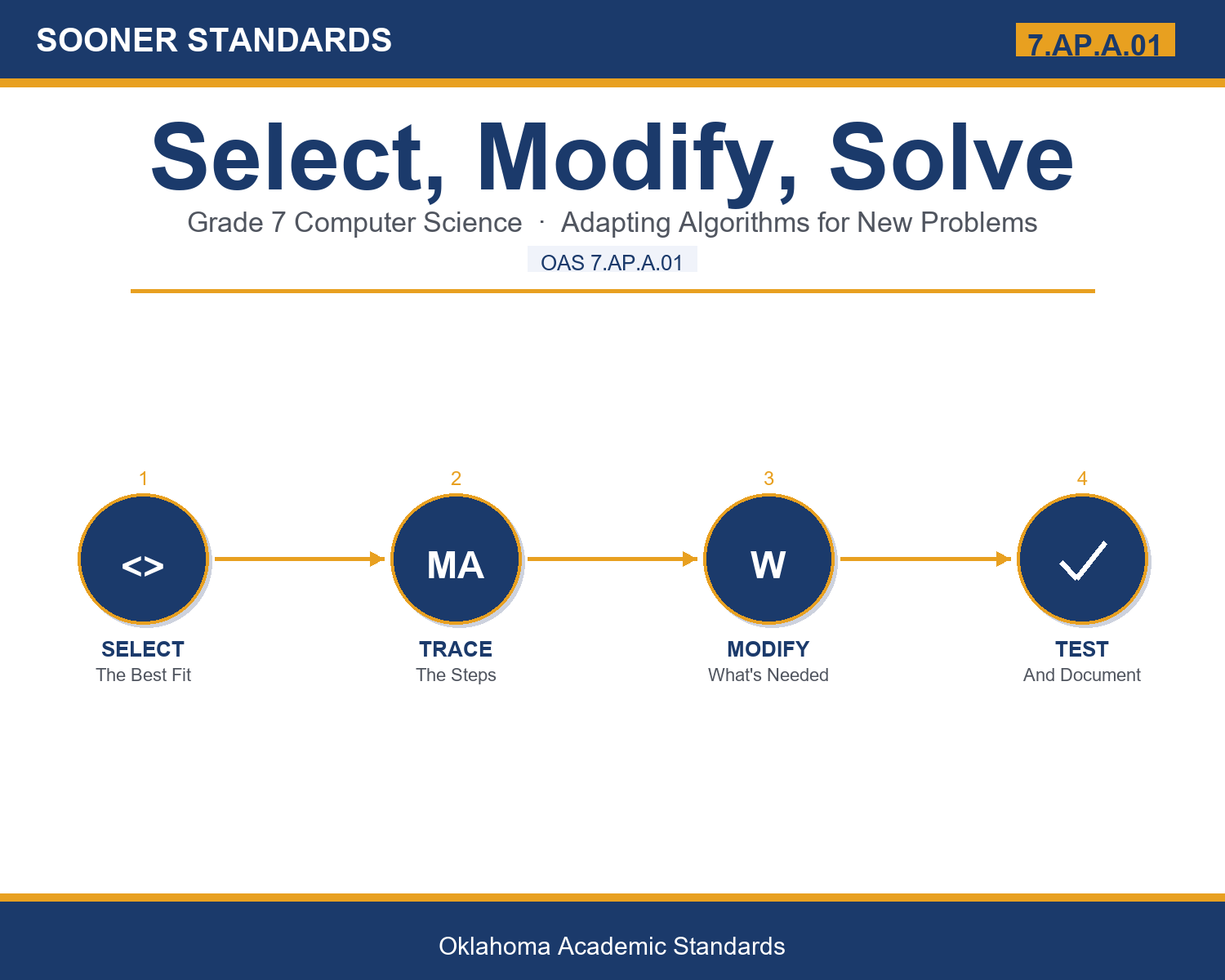
- I can compare existing algorithms against a problem's requirements and select the best fit.
- I can trace through an existing algorithm to understand what each step does.
- I can modify an existing algorithm's steps to fit a new, related problem.
- I can test and document a modification to confirm it works correctly.
Along the way, students pick up the working vocabulary of the topic: algorithm, modification, pseudocode, select, requirement, efficiency, trace, variable, iteration, debug, document, adapt.
Modifying Algorithms: Misconceptions to Watch For
These are the wrong turns students reliably take with this standard — knowing them ahead of time is half the lesson plan. Each correction strategy below comes straight from the unit's teacher guide (the paragraph and activity references point into the unit itself).
1. "A good programmer always writes a brand-new algorithm instead of reusing an existing one."
Use paragraph 1's key point — selecting and modifying an existing algorithm is often the more efficient, professional approach, rather than always designing something new.
2. "You can modify an algorithm correctly without first understanding what its current steps do."
Reference paragraph 3 — skipping the tracing step and jumping straight into changes is a common mistake that often leads to broken modifications.
3. "Once an algorithm is modified, it's automatically correct without needing to be tested."
Point to paragraph 5 — a modification that looks correct on paper can still contain unexpected errors, which is exactly why testing is essential.
4. "Documentation is optional if you're confident you'll remember your own changes."
Clarify from paragraph 6 — documentation helps others, and even your future self, understand changes that might otherwise be forgotten or unclear.
Discussion Starters You Can Use Tomorrow
- Why do you think it's important to understand an algorithm's existing steps before changing anything?
- What's an example of a small, targeted modification versus a large, messy one?
- Why might testing with sample inputs catch an error that wasn't obvious just by reading the modified algorithm?
Bringing It Home
This topic is a natural one for families. One ten-minute activity to try: Together, pick a simple routine or recipe at home and modify it together for a slightly different purpose (a recipe for fewer servings, a morning routine for a different schedule), then talk through what you changed and why.
Where This Leads
Students who can select and modify an existing algorithm in natural language or pseudocode to solve complex problems are building skills used every day in software engineering, data engineering, game development, open source development, and computer science education.
See the Unit in Action
Get the Complete 7.AP.A.01 Unit
I built a complete, no-prep unit for this standard — Selecting and Modifying Existing Algorithms — covering 3-4 days of instruction across 36 pages:
- Teacher guide — day-by-day pacing, misconceptions to watch for, discussion questions, differentiation for support / ELL / extension, and a 4-point rubric
- Student learning target page — a kid-friendly "I can" statement with success criteria
- Full content lesson with 3 embedded "Check Your Understanding" checkpoints
- 12-question assessment (6 multiple choice, 4 true/false, 2 short answer) with a complete answer key, explanations, and exemplar responses
- Group activity — "Select, Modify, and Test" (45-50 minutes)
- Individual activity — "Modify My Own Algorithm" (40-50 minutes)
- Crossword and word search built from all 12 vocabulary terms (with answer keys)
- Family connection letter — a plain-language page for parents, with dinner-table questions and a 10-minute home activity
- Certificate of achievement — ready to sign and send home
- Algorithm Scenario and Reference Materials (separate printable, 1 page)
Get Select, Modify, Solve on Teachers Pay Teachers →
Every Sooner Standards resource is built directly from the official Oklahoma Academic Standards for Computer Science (February 2023) — standard text verified, never paraphrased from memory.