Teaching Evaluating and Improving Computing Devices in Grade 6: Oklahoma Standard 6.CS.D.01
Teaching Evaluating and Improving Computing Devices in Grade 6: Oklahoma Standard 6.CS.D.01
Teaching evaluating and improving computing devices in grade 6 does not have to be complicated. Picture a UX designer redesigning an app's menu after watching real users get lost in it. That kind of thinking is exactly what Oklahoma's grade 6 computer science standard 6.CS.D.01 asks students to practice — and it is very teachable with the right materials. This post walks through what the standard means, the misconceptions students bring to it, and discussion starters you can use tomorrow, whether you teach in a classroom or at your kitchen table.
What Does Standard 6.CS.D.01 Actually Ask?
Evaluate existing computing devices and recommend improvements to the design based on personal interaction with the device. — Oklahoma Academic Standards for Computer Science (February 2023)
In plain language: Oklahoma's standard asks sixth graders to evaluate an existing computing device based on their personal interaction with it, and to recommend specific improvements to its design.
In student-friendly terms, the learning target is: "I can evaluate a computing device based on my own personal interaction with it and recommend specific, realistic improvements to its design."
What Students Should Be Able to Do
- I can assess a device across user interface, ergonomics, accessibility, and functionality.
- I can describe a specific design problem with concrete evidence, not a vague complaint.
- I can recommend a realistic, specific improvement tied directly to a problem I identified.
- I can explain who would benefit from my recommended improvement.
Along the way, students pick up the working vocabulary of the topic: device, interface, ergonomics, accessibility, prototype, iteration, feedback, functionality, touchscreen, hardware, software, durability.
Evaluating And Improving Computing Devices: Misconceptions to Watch For
These are the wrong turns students reliably take with this standard — knowing them ahead of time is half the lesson plan. Each correction strategy below comes straight from the unit's teacher guide (the paragraph and activity references point into the unit itself).
1. "A device is either 'good' or 'bad' overall, with no nuance."
Use the context-specific evaluation idea in paragraph 9 — a rugged tablet that's great for field research might be a poor choice for a sleek office setting. Quality depends on context and user.
2. "Vague opinions ('it's bad,' 'I don't like it') count as useful evaluation."
Model the specific-vs-vague comparison from paragraph 10 — push students to name the exact feature, the exact problem, and a specific fix every time.
3. "Accessibility features only matter for people with disabilities."
Point to the captions example in paragraph 4 — accessibility features like captions and adjustable text help everyone in certain situations, which is the core idea of universal design.
4. "The best improvement is always 'add more powerful hardware.'"
Reference paragraph 7's point that software optimization is often cheaper and more effective than bigger hardware. Challenge students to consider software fixes first.
Discussion Starters You Can Use Tomorrow
- Why might a device that's perfect for one person be frustrating for someone else?
- Describe a time an app or device update made something easier OR harder to use.
- Why do companies release multiple versions or updates of the same device over time?
Bringing It Home
This topic is a natural one for families. One ten-minute activity to try: Together, pick a device your family uses (a remote, a phone, an appliance with a screen) and have your child evaluate it using the categories from class: interface, ergonomics, accessibility, and functionality. Ask them to name one specific, realistic improvement and explain why it would help.
Where This Leads
Students who can evaluate a computing device based on my own personal interaction with it and recommend specific, realistic improvements to its design are building skills used every day in UX/UI design, industrial/product design, accessibility specialist, quality assurance/testing, and computer science education.
See the Unit in Action
Get the Complete 6.CS.D.01 Unit
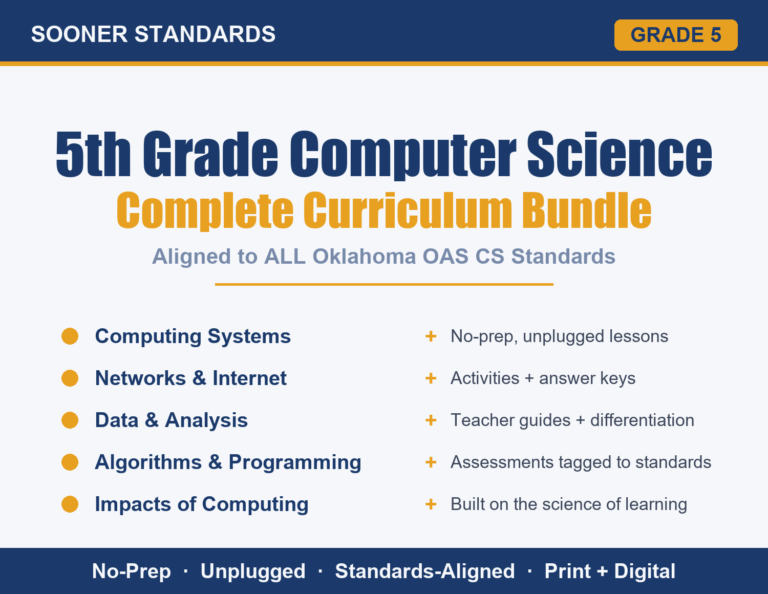
I built a complete, no-prep unit for this standard — Evaluating and Improving Computing Devices — covering 3-4 days of instruction across 40 pages:
- Teacher guide — day-by-day pacing, misconceptions to watch for, discussion questions, differentiation for support / ELL / extension, and a 4-point rubric
- Student learning target page — a kid-friendly "I can" statement with success criteria
- Full content lesson with 3 embedded "Check Your Understanding" checkpoints
- 12-question assessment (6 multiple choice, 4 true/false, 2 short answer) with a complete answer key, explanations, and exemplar responses
- Group activity — "Device Design Challenge" (50-60 minutes)
- Individual activity — "Personal Device Evaluation Report" (30-40 minutes)
- Crossword and word search built from all 12 vocabulary terms (with answer keys)
- Family connection letter — a plain-language page for parents, with dinner-table questions and a 10-minute home activity
- Certificate of achievement — ready to sign and send home
- Evaluation Checklist: Computing Devices (separate printable, 1 page)
- Device Evaluation Report Template (separate printable, 2 pages)
Get Evaluating and Improving Computing Devices on Teachers Pay Teachers →
Every Sooner Standards resource is built directly from the official Oklahoma Academic Standards for Computer Science (February 2023) — standard text verified, never paraphrased from memory.