Ocean Model – Personalities
What Defines Your Personality?
Personality is an easy concept for most of us to grasp. It’s what makes you, you. It encompasses all the traits, characteristics, and quirks that set you apart from everyone else.
The Ocean Model
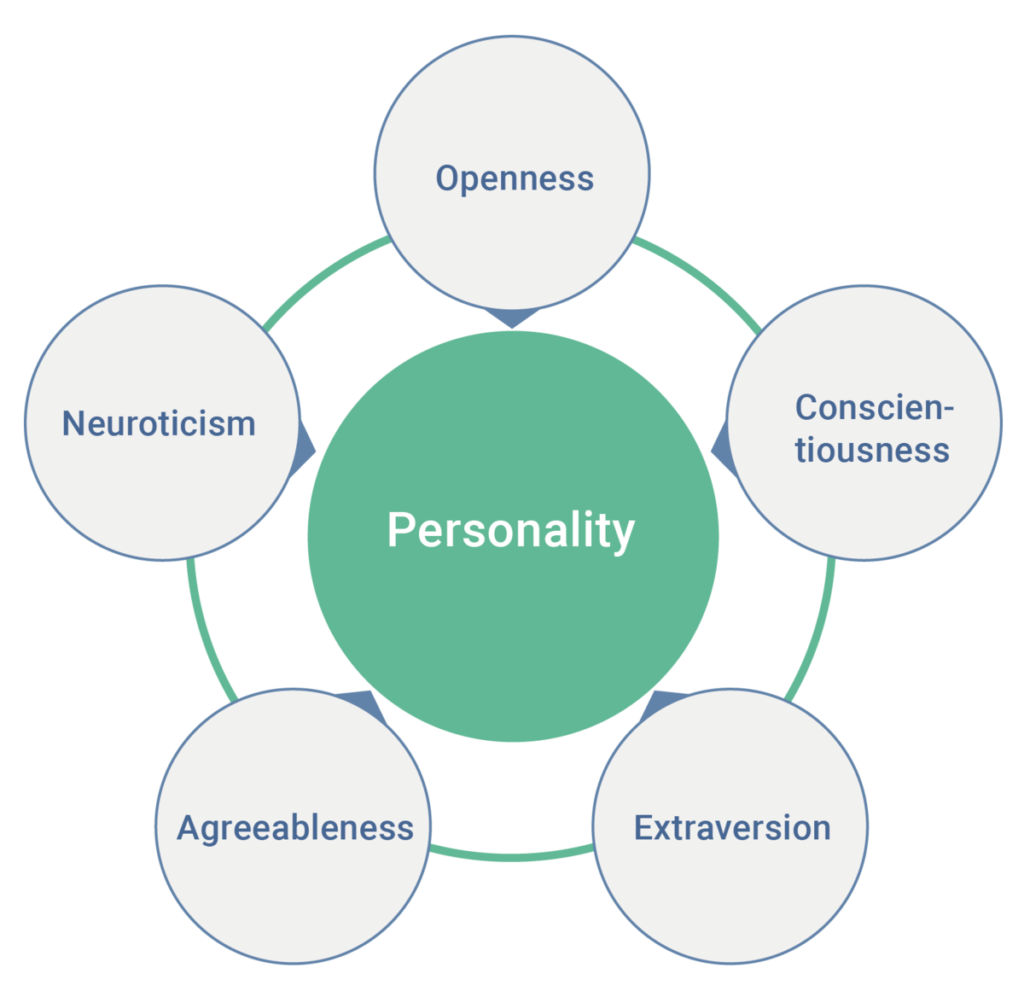
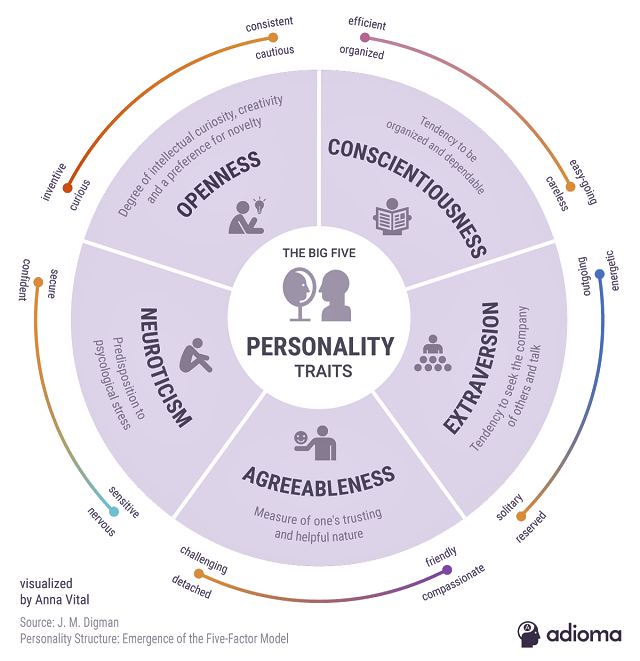
The Big Five Personality Traits Model measures five key dimensions of people’s personalities:
Openness: sometimes called “Intellect” or “Imagination,” this measures your level of creativity, and your desire for knowledge and new experiences.
Conscientiousness: this looks at the level of care that you take in your life and work. If you score highly in conscientiousness, you’ll likely be organized and thorough, and know how to make plans and follow them through. If you score low, you’ll likely be lax and disorganized.
Extraversion/Introversion: this dimension measures your level of sociability. Are you outgoing or quiet, for instance? Do you draw energy from a crowd, or do you find it difficult to work and communicate with other people?
Agreeableness: this dimension measures how well you get on with other people. Are you considerate, helpful and willing to compromise? Or do you tend to put your needs before others’?
Natural Reactions: sometimes called “Emotional Stability” or “Neuroticism,” this measures emotional reactions. Do you react negatively or calmly to bad news? Do you worry obsessively about small details, or are you relaxed in stressful situations?
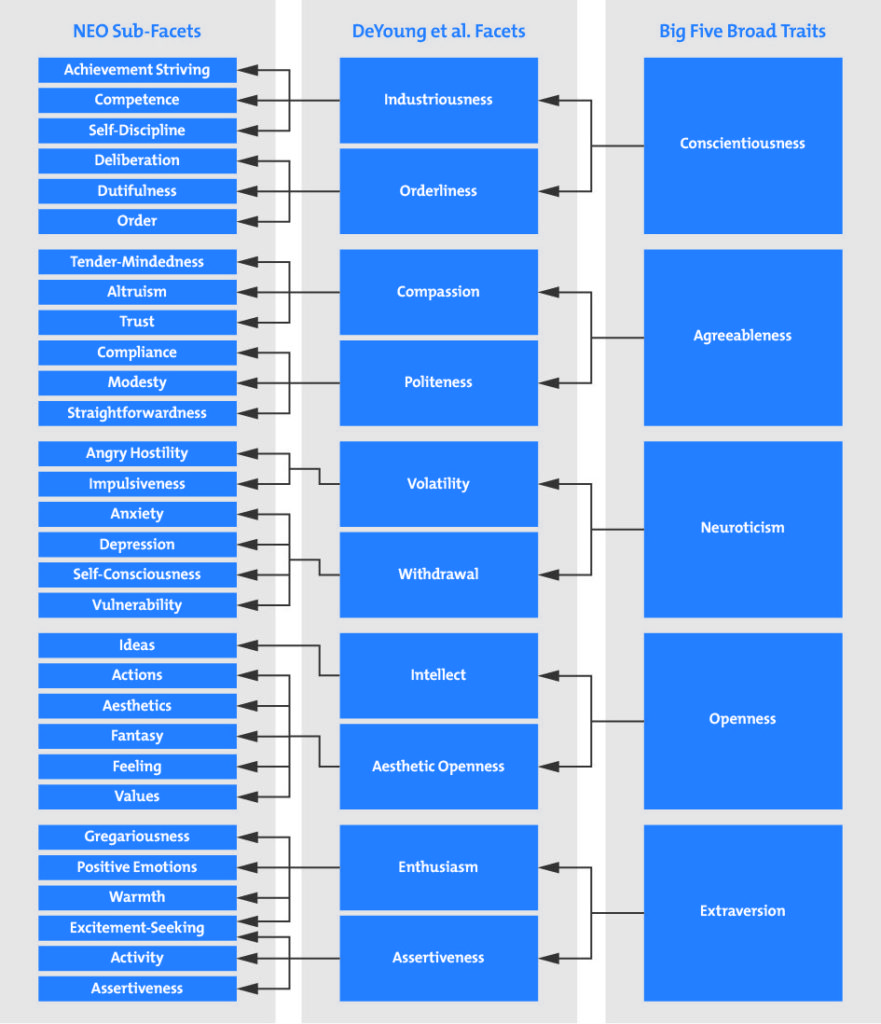
Subsets
These five primary traits are created from subsets. Based on quiz answers, the values are divided into subsets, which then are rolled to the broad traits.
Matt Cole has high regard for knowledge share. He has a desire to share critical thinking and information. With a Masters in Information Technology and a wide array of certifications, while not working full-time, he wishes to knowledge share through providing insight, information organization, and critical thinking skills.
#KnowledgeShare | Matt Cole | #infobyMattCole