The Transformative Impact of Artificial Intelligence on Student Learning and Academic Performance: Balancing Opportunities with Emerging Challenges
Artificial intelligence has fundamentally altered the educational landscape, creating unprecedented opportunities for personalized learning while simultaneously introducing complex challenges that require careful consideration. The integration of AI technologies in academic environments represents a paradigmatic shift from traditional educational approaches, offering students access to adaptive learning systems, intelligent tutoring platforms, and sophisticated analytical tools that can enhance their academic experience. Research conducted at the National University of Science and Technology POLITEHNICA Bucharest reveals that 95.6% of students actively utilize AI technologies in their academic activities, with virtual assistants being the most prevalent application at 88.2% usage rates (Vieriu & Petrea, 2025). This widespread adoption demonstrates the transformative potential of AI in education, while also highlighting the necessity for structured implementation frameworks that maximize benefits while mitigating associated risks. The educational sector’s rapid embrace of AI technologies reflects broader technological trends, yet the implications for student learning outcomes, critical thinking development, and academic integrity remain subjects of ongoing scholarly investigation. Educational institutions worldwide are grappling with questions of how to effectively integrate AI tools while preserving the fundamental principles of academic rigor and intellectual development. The emergence of AI in education has created a complex ecosystem where traditional pedagogical approaches must adapt to accommodate new technological capabilities, requiring educators and administrators to carefully balance innovation with educational effectiveness.
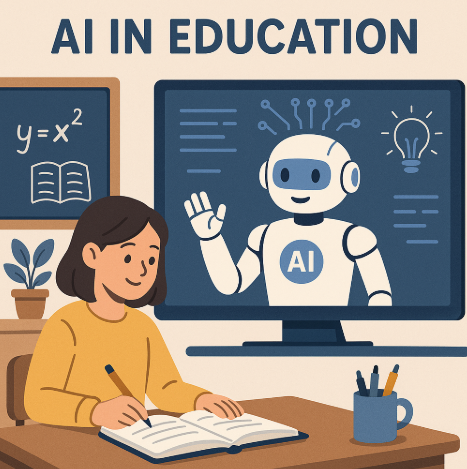
The personalization capabilities of AI represent one of its most significant contributions to modern education, enabling adaptive learning experiences that respond to individual student needs, learning styles, and academic progress. Intelligent tutoring systems have demonstrated remarkable effectiveness in providing tailored guidance and feedback based on students’ knowledge levels and learning patterns, creating educational experiences that were previously impossible to achieve at scale (Hwang et al., 2020). These systems analyze vast amounts of data to identify learning gaps and recommend specific interventions, allowing students to progress at their own pace while receiving targeted support in areas where they struggle most. The personalization aspect extends beyond simple content delivery to include sophisticated algorithms that adjust difficulty levels, presentation formats, and assessment methods based on real-time analysis of student performance. Research indicates that students in personalized learning environments exhibit improved self-efficacy and more positive attitudes toward their education, suggesting that AI-driven customization can enhance both academic outcomes and student motivation (Johnson & Smith, 2019). The ability of AI systems to process and analyze learning data continuously enables educators to gain unprecedented insights into student progress and learning patterns, facilitating more informed instructional decisions. However, the implementation of personalized AI systems also raises important questions about data privacy, algorithmic bias, and the potential for over-reliance on technological solutions in educational contexts that traditionally emphasized human interaction and mentorship.
The efficiency gains provided by AI technologies have revolutionized how students approach their academic responsibilities, with significant implications for time management and learning optimization. Students report that AI tools substantially reduce the time required for research, information processing, and repetitive academic tasks, allowing them to focus more on critical thinking and analytical activities (Vieriu & Petrea, 2025). The ability of AI systems to provide rapid summarization, relevant information retrieval, and complex calculations enables learners to allocate their cognitive resources more effectively, potentially leading to deeper engagement with course material. Virtual assistants have become particularly valuable for students seeking immediate access to information, clarification of concepts, and assistance with task organization, creating a more responsive and accessible learning environment. The time-saving benefits of AI extend to various academic activities, including literature reviews, data analysis, and content generation, though these capabilities also raise concerns about students’ development of essential research and analytical skills. Educational platforms leveraging AI have demonstrated significant potential for enhancing student engagement through interactive features, immediate feedback mechanisms, and adaptive content delivery systems that maintain student interest and motivation. The optimization of learning efficiency through AI tools has enabled students to handle more complex coursework and engage with a broader range of academic materials, potentially expanding their intellectual horizons and academic capabilities.
Despite the numerous benefits associated with AI integration in education, significant concerns have emerged regarding the accuracy and reliability of AI-generated content and its impact on student learning outcomes. Research findings indicate that 48.2% of students express concerns about the possibility of receiving incorrect or imprecise information from AI systems, highlighting a critical challenge in the widespread adoption of these technologies (Vieriu & Petrea, 2025). The potential for AI systems to provide inaccurate information poses serious risks to student learning, particularly when students rely heavily on AI-generated content without developing critical evaluation skills. The complexity of ensuring accuracy in AI systems stems from their reliance on training data that may contain biases, outdated information, or factual errors, which can be perpetuated and amplified through AI outputs. Educational institutions face the challenge of implementing validation protocols and quality control measures to ensure that AI-generated content meets academic standards and supports rather than undermines educational objectives. The accuracy concerns extend beyond simple factual errors to include more subtle issues such as contextual misunderstandings, cultural biases, and oversimplified explanations that may not adequately address the complexity of academic subjects. Students and educators must develop sophisticated evaluation skills to assess the reliability of AI-generated content and integrate it appropriately into their academic work. The implementation of robust fact-checking mechanisms and validation processes represents a critical component of responsible AI integration in educational settings.
The risk of over-dependence on AI technologies has emerged as a significant concern among educators and researchers, with potential implications for students’ development of critical thinking and independent problem-solving skills. Studies reveal that 16.5% of students worry about becoming overly dependent on technology, while an equal percentage express concerns about AI’s negative impact on critical thinking (Vieriu & Petrea, 2025). The convenience and accessibility of AI tools may inadvertently discourage students from developing essential cognitive skills, such as analytical reasoning, creative problem-solving, and independent research capabilities. Over-reliance on AI for academic tasks could result in a generation of students who struggle to function effectively without technological assistance, potentially undermining their long-term academic and professional success. The challenge lies in finding an appropriate balance between leveraging AI’s capabilities and ensuring that students maintain and develop their intellectual autonomy and critical thinking abilities. Educational institutions must consider how to structure AI integration in ways that complement rather than replace human cognitive development, ensuring that technology serves as a tool for enhancement rather than a crutch for intellectual dependency. The development of guidelines and best practices for AI usage in academic contexts becomes crucial for preventing over-dependence while maximizing the benefits of these technologies. Long-term research is needed to understand the full implications of AI dependence on student cognitive development and academic preparedness for future challenges.
Data privacy and ethical considerations represent critical challenges in the implementation of AI technologies in educational environments, requiring careful attention to student rights and institutional responsibilities. The collection and analysis of student data by AI systems raise important questions about privacy protection, data ownership, and the potential for misuse of sensitive educational information. Educational institutions must navigate complex regulatory frameworks while ensuring that AI implementations comply with relevant privacy laws and institutional policies governing student data protection. The algorithmic decision-making processes inherent in AI systems can introduce biases that may disproportionately affect certain student populations, potentially exacerbating existing educational inequities rather than addressing them. Concerns about data security and the potential for unauthorized access to student information require robust cybersecurity measures and transparent data governance policies. The ethical implications of AI in education extend beyond privacy concerns to include questions about algorithmic transparency, accountability, and the potential for AI systems to perpetuate or amplify societal biases. Educational institutions must develop comprehensive ethical frameworks for AI implementation that address these concerns while enabling the beneficial uses of these technologies. The development of ethical guidelines and oversight mechanisms becomes essential for ensuring that AI integration in education serves the best interests of all students while protecting their fundamental rights and promoting educational equity.
The impact of AI on academic integrity and educational authenticity has become a pressing concern as students gain access to increasingly sophisticated content generation tools. The availability of AI systems capable of producing high-quality written work, solving complex problems, and generating creative content has created new challenges for maintaining academic honesty and ensuring that student assessments accurately reflect individual learning and achievement. Educational institutions must grapple with questions about appropriate AI usage in academic contexts and develop policies that distinguish between legitimate AI assistance and academic misconduct. The challenge extends beyond simple plagiarism detection to encompass more nuanced questions about the role of AI in student learning and the authentic demonstration of academic competencies. The risk of students using AI-generated content without proper attribution or understanding undermines the fundamental purpose of educational assessment and evaluation. Educators must develop new approaches to assessment and evaluation that account for the availability of AI tools while ensuring that students demonstrate genuine understanding and skill development. The implementation of honor codes and academic integrity policies specifically addressing AI usage becomes crucial for maintaining the credibility and effectiveness of educational programs. The development of AI literacy among both students and educators represents an essential component of addressing these challenges and ensuring responsible integration of AI technologies in academic contexts.
The integration of AI technologies in education requires comprehensive institutional support and strategic planning to ensure effective implementation and maximize educational benefits. Educational institutions must invest in faculty development and training programs to ensure that educators can effectively utilize AI tools and integrate them appropriately into their teaching practices. The successful implementation of AI in education requires more than simply providing access to technology; it demands a fundamental rethinking of pedagogical approaches and assessment methods to accommodate new capabilities and address emerging challenges. Institutional leadership must develop clear policies and guidelines governing AI usage while providing the necessary infrastructure and support systems to enable effective integration. The cost considerations associated with AI implementation, including licensing fees, infrastructure requirements, and ongoing maintenance costs, require careful financial planning and resource allocation. Collaboration between educational institutions, technology providers, and researchers becomes essential for developing best practices and sharing knowledge about effective AI integration strategies. The development of comprehensive training programs for both faculty and students ensures that all stakeholders can effectively utilize AI technologies while understanding their limitations and potential risks. Long-term strategic planning must account for the rapidly evolving nature of AI technologies and the need for continuous adaptation and improvement of implementation approaches.
The future trajectory of AI in education depends largely on the development of balanced approaches that harness the technology’s potential while addressing its inherent limitations and risks. Research suggests that the most effective implementations of AI in education involve careful integration with traditional pedagogical methods rather than wholesale replacement of established practices (Holmes & Tuomi, 2022). The development of hybrid learning models that combine AI capabilities with human instruction and mentorship represents a promising direction for maximizing educational benefits while preserving essential human elements of the learning process. Ongoing research and evaluation are crucial for understanding the long-term impacts of AI integration on student learning outcomes, cognitive development, and academic preparedness. The establishment of clear standards and benchmarks for AI effectiveness in educational contexts enables institutions to make informed decisions about technology adoption and implementation strategies. Collaboration between educational researchers, technology developers, and practitioners facilitates the development of evidence-based approaches to AI integration that prioritize student learning and well-being. The continuous monitoring and evaluation of AI implementations allow for iterative improvements and adjustments based on empirical evidence and stakeholder feedback. The future success of AI in education ultimately depends on the ability of educational institutions to maintain focus on fundamental educational objectives while leveraging technology to enhance rather than replace essential human elements of teaching and learning.
References
Holmes, W., & Tuomi, I. (2022). State of the art and practice in AI in education. European Journal of Education, 57, 542–570. https://doi.org/10.1111/ejed.12533
Hwang, G. J., Xie, H., Wah, B. W., & Gasevic, D. (2020). Vision, challenges, roles, and research issues of artificial intelligence in education. Computers & Education: Artificial Intelligence, 1, 100001. https://doi.org/10.1016/j.caeai.2020.100001
Johnson, A., & Smith, B. (2019). The impact of personalized learning on student attitudes and self-efficacy in mathematics. Educational Technology Research and Development, 38(2), 201–218.
Vieriu, A. M., & Petrea, G. (2025). The impact of artificial intelligence (AI) on students’ academic development. Education Sciences, 15(3), 343. https://doi.org/10.3390/educsci15030343