
Machiavellian Self-Development: 12 Ruthless Rules for Personal Transformation in 2025
The pursuit of personal excellence has never been more crucial than in today’s hypercompetitive landscape. Drawing inspiration from Niccolò Machiavelli’s strategic principles and modern psychological research, this comprehensive guide presents twelve transformative rules for becoming the strongest version of yourself. These principles transcend traditional self-help approaches, offering a pragmatic framework for those willing to embrace discomfort in service of growth.
The foundation of authentic personal development rests upon understanding a fundamental truth: comfort breeds mediocrity, while challenge forges strength. Modern research indicates that Machiavelli advances an ethical system for leadership that involves uprooting corruption and establishing rule of law, principles that extend beyond governance into personal mastery. This article synthesizes classical wisdom with contemporary insights to deliver actionable strategies for comprehensive self-improvement.
The concept of Machiavellian self-development has gained significant traction among high-achievers who recognize that conventional approaches often lack the intensity required for substantial transformation. A good leader is essentially someone who is respected and supported by the people they guide because this person is smart enough to authentically know, trust, value, and encourage the flourishing of the skills that each individual brings to the group. This principle applies equally to self-leadership, where one must develop the capacity to guide their own development with strategic precision.
The Ruthless Foundation: Brutal Acceptance and Savage Responsibility
The first pillar of Machiavellian self-development demands confronting reality without the cushion of delusion. True transformation begins with the stark recognition that no external force will orchestrate your success. This principle aligns with modern psychological research on internal locus of control, which demonstrates that individuals who accept complete responsibility for their outcomes achieve significantly higher levels of personal and professional success.
The concept of “brutal acceptance” requires acknowledging your current limitations, circumstances, and the harsh realities of your environment without self-pity or blame. This mirrors Machiavelli’s emphasis on understanding human nature as it truly exists, not as we wish it to be. Machiavelli is addressing the typically Machiavellian question of whether it is better for a prince to be feared or to be loved, which translates to personal development as choosing effectiveness over comfort.
Savage responsibility extends beyond mere acknowledgment to active ownership of every aspect of your development. This means eliminating victim mentality, excuse-making, and dependency on external validation. Research in cognitive behavioral psychology supports this approach, showing that individuals who maintain high personal accountability demonstrate greater resilience and achievement over time. The practical application involves conducting regular self-assessments, identifying areas of weakness without defensiveness, and creating specific action plans for improvement.
The implementation of this foundation requires daily practices that reinforce these principles. Morning reflection sessions should include honest evaluation of previous day’s performance, identification of excuses or blame patterns, and commitment to complete ownership of outcomes. Evening reviews must focus on lessons learned from failures and specific strategies for improvement. This systematic approach to self-examination creates the mental framework necessary for sustained growth.
Modern neuroscience research reveals that consistent self-reflection practices actually rewire neural pathways, strengthening areas of the brain associated with self-control and rational decision-making. This biological basis supports the Machiavellian emphasis on calculated, strategic thinking over emotional reactivity. The combination of brutal honesty about current reality and complete responsibility for future outcomes creates the psychological foundation upon which all other development efforts can be built.
Rule One: Discipline as the Architecture of Freedom
Discipline represents the cornerstone of authentic freedom, contradicting the modern misconception that liberty means acting on every impulse. True freedom emerges when your actions align consistently with your long-term vision rather than short-term desires. This principle finds support in contemporary psychological research on delayed gratification, which demonstrates that individuals capable of deferring immediate pleasures achieve superior outcomes across multiple life domains.
The misconception that discipline represents restriction stems from a fundamental misunderstanding of its purpose. Discipline creates the framework within which genuine choice becomes possible. Without disciplined habits, individuals become slaves to circumstance, mood, and impulse. Self-discipline is about controlling your thoughts, feelings, and actions to achieve your goals. People with strong self-discipline often feel less stressed, more resilient, and happier. This research validates the Machiavellian approach to systematic self-control.
Developing disciplined practices requires understanding the neurological basis of habit formation. The brain’s basal ganglia, responsible for automatic behaviors, can be programmed through consistent repetition. This means that disciplined actions, initially requiring conscious effort, eventually become automatic responses. The strategic implementation involves identifying key behaviors that support your major objectives and practicing them consistently regardless of emotional state or external circumstances.
The practical framework for building discipline involves three sequential phases: establishment, consolidation, and expansion. The establishment phase focuses on creating one fundamental habit that supports your primary objective, practicing it daily for a minimum of sixty-six days. Research indicates this timeframe as necessary for neural pathway formation. The consolidation phase involves maintaining the established habit while gradually increasing its intensity or complexity. The expansion phase introduces additional disciplined practices built upon the foundation of proven consistency.
Modern behavioral psychology emphasizes the importance of environmental design in supporting disciplined behavior. This aligns with Machiavellian strategic thinking, which emphasizes controlling circumstances rather than merely responding to them. Practical applications include removing temptations from your environment, creating visual cues for desired behaviors, and establishing accountability systems that provide external reinforcement for disciplined choices.
The relationship between discipline and energy management cannot be overlooked. Contrary to popular belief, disciplined practices actually increase available energy rather than depleting it. This occurs through two mechanisms: elimination of energy-draining decision fatigue and optimization of physical and mental resources through consistent practices. Strategic implementation involves scheduling demanding disciplined activities during peak energy periods and using routine practices to conserve mental resources for important decisions.
Physical discipline forms the foundation for mental and emotional discipline. Regular exercise, consistent sleep schedules, and nutritional discipline create the biological basis for sustained high performance. Research in exercise physiology demonstrates that physical training improves cognitive function, emotional regulation, and stress resilience. The Machiavellian approach involves viewing physical discipline not as vanity but as strategic preparation for mental challenges.
Rule Two: Relentless Focus as the Amplifier of Power
Focus represents the multiplicative force that transforms effort into achievement. In an environment characterized by constant distraction and fragmented attention, the ability to concentrate sustained mental energy on specific objectives becomes a decisive competitive advantage. Real success in leadership comes when you learn to balance both, knowing when to stand strong like a lion and when to outsmart challenges like a fox. This balance requires focused attention to distinguish between situations requiring different approaches.
The neuroscience of attention reveals that focused mental activity literally reshapes brain structure through neuroplasticity. Areas of the brain associated with sustained concentration strengthen with practice, while regions responsible for distraction and mind-wandering weaken. This biological foundation supports the Machiavellian emphasis on strategic concentration of resources. The practical implication involves treating focus development as a trainable skill rather than an innate talent.
Developing relentless focus requires understanding the distinction between concentration and attention management. Concentration involves directing mental energy toward specific objects or tasks, while attention management encompasses the strategic allocation of mental resources across multiple competing demands. The Machiavellian approach emphasizes both components, creating systems for intensive concentration while maintaining awareness of broader strategic considerations.
Environmental factors significantly impact focus capacity. Modern research in cognitive psychology demonstrates that physical environment, noise levels, visual complexity, and digital connectivity directly influence attention quality. Strategic implementation involves designing physical spaces that support concentrated work, establishing protocols for managing digital distractions, and creating rituals that signal transition into focused work modes. These environmental controls align with Machiavellian principles of controlling circumstances to support desired outcomes.
The concept of “flow state” represents the optimal condition for focused performance. Research by psychologist Mihaly Csikszentmihalyi identifies specific conditions that promote this state: clear objectives, immediate feedback, balance between challenge and skill level, and elimination of self-consciousness. The Machiavellian application involves systematically creating these conditions for important work, treating flow state achievement as a strategic priority rather than accidental occurrence.
Time blocking represents a tactical approach to focus implementation. This involves allocating specific time periods exclusively to particular activities, treating these commitments with the same seriousness as external appointments. Research in time management demonstrates that individuals using systematic scheduling achieve higher productivity and lower stress levels compared to those relying on reactive prioritization. The key involves protecting focused work periods from interruption regardless of external pressures.
The relationship between focus and energy cycles requires strategic consideration. Cognitive research reveals that mental energy fluctuates predictably throughout the day, with most individuals experiencing peak focus capacity during morning hours. The Machiavellian approach involves scheduling most important work during personal peak performance periods, using lower-energy times for routine tasks that require minimal concentration.
Digital minimalism represents a crucial component of modern focus development. The constant availability of information, entertainment, and social connection creates unprecedented challenges for sustained attention. Strategic implementation involves establishing specific times for digital engagement, using technology tools that support rather than undermine focus, and creating physical barriers between focused work and digital distractions.
Rule Three: Forging Unshakable Resilience Through Strategic Hardship
Resilience emerges not from avoiding difficulty but from systematically exposing yourself to controlled challenges that build psychological strength. This principle aligns with hormesis, a biological concept demonstrating that moderate stress exposure creates adaptive responses that improve overall system resilience. The Machiavellian approach involves deliberately seeking appropriate challenges rather than waiting for life to impose them randomly.
Understanding the neurobiological basis of resilience provides insight into effective development strategies. Chronic stress depletes neural resources and impairs cognitive function, while acute stress followed by recovery periods strengthens stress response systems. The practical application involves designing training protocols that expose you to manageable stressors in controlled environments, building capacity for handling larger challenges when they arise unexpectedly.
Cognitive reframing represents a fundamental resilience skill, involving the ability to interpret setbacks as learning opportunities rather than personal failures. This mental flexibility allows individuals to extract value from difficult experiences while maintaining forward momentum. Leaders who constantly learn, especially from others, are bound to win. The systematic development of reframing skills involves practicing alternative interpretations of challenging situations, seeking lessons in every setback, and maintaining long-term perspective during short-term difficulties.
Physical resilience forms the foundation for psychological resilience. Regular exposure to physical challenges through exercise, cold exposure, heat stress, or other controlled stressors builds capacity for handling mental and emotional difficulties. Research in exercise physiology demonstrates that physical training improves stress hormone regulation, enhances mood stability, and increases overall life satisfaction. The strategic approach involves progressively increasing physical challenges while monitoring recovery capacity.
Social resilience involves building networks of relationships that provide support during difficult periods while avoiding dependency that undermines self-reliance. The Machiavellian approach emphasizes reciprocal relationships where you provide value to others rather than simply seeking assistance. This creates more robust support systems that remain available during challenging times. Practical implementation involves systematically investing in relationships during good times, developing diverse social networks, and maintaining connections through consistent communication.
Financial resilience represents a critical component often overlooked in psychological discussions. Financial stress significantly impacts mental health, decision-making capacity, and overall life satisfaction. The strategic approach involves building emergency reserves, developing multiple income streams, and acquiring skills that provide economic flexibility. This financial foundation creates psychological security that enables taking calculated risks for growth.
The concept of “anti-fragility,” developed by Nassim Taleb, extends beyond resilience to describe systems that become stronger through stress exposure. Applying this principle to personal development involves seeking challenges that push your capabilities while building redundancies that prevent catastrophic failure. The practical implementation requires careful balance between challenge and safety, progressive overload, and systematic recovery periods.
Emotional resilience involves developing the capacity to experience difficult emotions without being overwhelmed or making impulsive decisions. This skill requires understanding emotional physiology, practicing emotional regulation techniques, and building tolerance for discomfort. Research in emotional intelligence demonstrates that individuals with greater emotional resilience achieve superior outcomes in both personal and professional contexts.
Rule Four: Strategic Patience and Delayed Gratification
The ability to defer immediate pleasures in service of larger objectives represents perhaps the most predictive factor for long-term success across multiple life domains. Research by Walter Mischel on delayed gratification demonstrates that individuals capable of resisting immediate temptations achieve superior outcomes in academic achievement, health, career advancement, and overall life satisfaction. The Machiavellian application involves systematically training this capacity through progressive challenges.
Understanding the neurological basis of impulse control provides insight into effective development strategies. The prefrontal cortex, responsible for executive function and long-term planning, can override limbic system impulses through conscious effort and practice. This neural competition between immediate gratification and long-term objectives requires systematic training to strengthen prefrontal dominance. Practical applications include meditation practices that enhance self-awareness and decision-making protocols that introduce delays between impulse and action.
Strategic patience differs from passive waiting through active preparation and systematic progress toward long-term objectives. While maintaining focus on distant goals, strategic patience involves identifying intermediate milestones, developing necessary skills, and creating favorable conditions for eventual success. This approach aligns with Machiavellian emphasis on preparation and strategic positioning rather than reactive responses to opportunities.
The compound effect represents the mathematical principle underlying delayed gratification strategies. Small, consistent actions accumulated over extended periods produce exponentially greater results than sporadic intense efforts. This principle applies to skill development, wealth building, relationship cultivation, and health improvement. The practical implementation requires identifying high-leverage activities that provide cumulative benefits and maintaining consistency regardless of immediate visible progress.
Developing tolerance for uncertainty represents a crucial component of strategic patience. Many individuals abandon long-term strategies due to discomfort with unclear outcomes or extended timelines. Research in cognitive psychology demonstrates that uncertainty tolerance can be systematically developed through exposure therapy and mindfulness practices. The Machiavellian approach involves reframing uncertainty as competitive advantage, recognizing that most individuals lack patience for long-term strategies.
Investment thinking provides a framework for evaluating trade-offs between immediate and delayed benefits. Every decision involves allocating limited resources (time, energy, money, attention) across competing alternatives. The strategic approach involves calculating expected returns from different options while considering risk factors and timeline requirements. This analytical framework reduces emotional decision-making and supports rational choices that favor long-term optimization.
The relationship between delayed gratification and identity formation cannot be overlooked. Individuals who consistently choose long-term benefits over immediate pleasures develop stronger self-concept and greater confidence in their ability to achieve difficult objectives. This psychological strength creates positive feedback loops that make future delayed gratification decisions easier. The practical application involves treating each delayed gratification choice as identity reinforcement rather than sacrifice.
Creating systematic rewards for delayed gratification helps maintain motivation during extended pursuit of long-term objectives. While avoiding immediate gratification in target areas, establishing celebration rituals for milestone achievements provides positive reinforcement for strategic patience. The key involves ensuring that rewards support rather than undermine long-term objectives, creating sustainable motivation systems.
Rule Five: Mastering Power Dynamics and Influence
Understanding and navigating power dynamics represents an essential skill for achieving objectives in any social or professional environment. Power operates through multiple channels: formal authority, expertise, resource control, relationship networks, and information access. Machiavellians tend to be charismatic, charming, and leaderlike. Couple that with a strategic and opportunistic approach to life, and you get why Machiavellians win. The strategic approach involves systematically developing multiple power sources rather than relying on single channels.
Influence psychology reveals that human decision-making involves both rational analysis and emotional responses. Research by Robert Cialdini identifies six primary influence principles: reciprocity, commitment/consistency, social proof, authority, liking, and scarcity. Understanding these mechanisms allows for ethical influence that serves mutual interests while advancing your objectives. The Machiavellian application involves systematic study and practice of these principles in appropriate contexts.
Network development represents a fundamental component of power building. Strong professional and personal networks provide access to opportunities, information, resources, and support systems. The strategic approach involves providing value to others before seeking assistance, maintaining relationships consistently over time, and developing diverse networks across multiple domains. Research in network theory demonstrates that individuals with broader, more diverse networks achieve superior career outcomes.
Communication skills form the primary vehicle for exercising influence and navigating power dynamics. This encompasses verbal communication, written communication, nonverbal cues, and active listening. Research in communication psychology demonstrates that individuals with superior communication skills advance more rapidly in careers and achieve greater personal satisfaction. The systematic development involves practice in multiple communication contexts, feedback collection, and continuous skill refinement.
Negotiation represents a specialized application of influence skills with direct impact on resource acquisition and objective achievement. Effective negotiation involves preparation, understanding counterpart interests, creative problem-solving, and strategic communication. Research in negotiation psychology reveals that individuals trained in systematic negotiation approaches achieve significantly superior outcomes. The practical application involves treating every significant interaction as a negotiation opportunity while maintaining ethical boundaries.
Political awareness within organizational and social contexts provides essential intelligence for strategic decision-making. Understanding informal power structures, alliance patterns, communication channels, and decision-making processes enables more effective navigation of complex environments. This awareness develops through careful observation, strategic questioning, and systematic information gathering rather than gossip or speculation.
Reputation management represents a long-term power building strategy often overlooked in short-term focused approaches. Your reputation influences others’ willingness to work with you, provide opportunities, and support your objectives. Strategic reputation building involves consistent demonstration of competence, reliability, and ethical behavior while avoiding actions that could undermine credibility. The time investment in reputation building provides compound returns through enhanced influence capacity.
The balance between assertiveness and collaboration requires careful calibration based on context and objectives. Excessive assertiveness can create resistance and damaged relationships, while insufficient assertiveness may result in overlooked contributions and missed opportunities. Research in leadership psychology demonstrates that situational flexibility in assertiveness levels correlates with greater influence effectiveness and career advancement.
Rule Six: Emotional Intelligence and Self-Regulation
Emotional intelligence encompasses the ability to recognize, understand, and manage both your own emotions and those of others. Research demonstrates that emotional intelligence predicts success more reliably than cognitive intelligence across multiple life domains. Studies show that disciplined people feel less stressed and happier. They manage their goals well, not by giving up, but by controlling their actions. This emotional regulation capacity represents a trainable skill set rather than fixed personality trait.
Self-awareness forms the foundation of emotional intelligence, involving accurate recognition of your emotional states, triggers, and typical response patterns. Developing self-awareness requires systematic attention to internal experiences, regular reflection practices, and feedback collection from trusted sources. Research in mindfulness demonstrates that meditation practices significantly enhance emotional self-awareness while improving overall psychological well-being.
Emotional regulation involves managing emotional intensity and duration to support optimal decision-making and performance. This skill encompasses both up-regulation (increasing positive emotions) and down-regulation (managing negative emotions) techniques. Practical strategies include cognitive reframing, breathing techniques, physical exercise, and environmental modifications. The strategic approach involves developing multiple regulation strategies suitable for different contexts and emotional states.
Social awareness extends emotional intelligence beyond self-focus to include accurate perception of others’ emotional states, needs, and motivations. This capacity enables more effective communication, collaboration, and influence. Developing social awareness involves active listening, nonverbal communication observation, and perspective-taking practice. Research in social psychology demonstrates that individuals with superior social awareness achieve greater success in leadership roles and interpersonal relationships.
Relationship management represents the application of emotional intelligence to achieve positive outcomes in interpersonal interactions. This encompasses conflict resolution, collaboration facilitation, influence exercises, and team building. The systematic development involves practicing emotional intelligence skills in progressively challenging social situations while maintaining ethical standards and mutual respect.
Stress management represents a specialized application of emotional regulation with direct impact on performance and health outcomes. Chronic stress impairs cognitive function, decision-making capacity, and physical health while reducing overall life satisfaction. Strategic stress management involves identifying stress sources, developing multiple coping strategies, and creating lifestyle patterns that promote stress resilience.
The relationship between emotional intelligence and leadership effectiveness has been extensively documented in organizational psychology research. Leaders with higher emotional intelligence create more positive work environments, achieve superior team performance, and demonstrate greater career advancement. The practical application involves treating emotional intelligence development as essential leadership preparation rather than optional soft skill enhancement.
Empathy development enhances emotional intelligence through improved understanding of others’ perspectives and experiences. While avoiding manipulation, strategic empathy enables more effective communication and collaboration by addressing others’ genuine needs and concerns. Research demonstrates that empathy can be systematically developed through perspective-taking exercises, diverse relationship building, and mindfulness practices.
Rule Seven: Continuous Learning and Skill Acquisition
Intellectual development represents the foundation for adapting to changing environments and capitalizing on emerging opportunities. In rapidly evolving economic and technological landscapes, the ability to acquire new knowledge and skills quickly becomes a decisive competitive advantage. A prudent man should always follow in the path trodden by great men and imitate those who are most excellent, so that if he does not attain to their greatness, at any rate he will get some tinge of it. This principle emphasizes systematic learning from successful models.
Learning efficiency involves optimizing the process of knowledge acquisition and skill development through evidence-based techniques. Research in cognitive science reveals specific strategies that enhance learning effectiveness: spaced repetition, active recall, interleaving different topics, and connecting new information to existing knowledge structures. The systematic application of these techniques significantly accelerates skill development while improving retention rates.
Skill selection requires strategic analysis to identify capabilities that provide maximum leverage for your specific objectives and circumstances. Rather than pursuing random learning opportunities, the Machiavellian approach involves analyzing market trends, identifying competitive advantages, and focusing development efforts on high-impact capabilities. This strategic focus prevents dilution of efforts while maximizing return on learning investments.
The 80/20 principle applies to skill development, where approximately 20% of capabilities typically produce 80% of results. Identifying and prioritizing these high-leverage skills enables more efficient development while avoiding perfectionism in less critical areas. This approach aligns with Machiavellian emphasis on strategic resource allocation and practical effectiveness over theoretical completeness.
Mentorship and model identification provide accelerated learning through access to proven strategies and expert guidance. Systematic study of successful individuals in relevant domains reveals patterns, strategies, and approaches that can be adapted to your circumstances. The practical implementation involves identifying multiple mentors for different skill areas, systematic observation of successful models, and strategic questioning to extract key insights.
Experiential learning complements theoretical study through practical application and real-world testing. While knowledge acquisition provides foundation understanding, skill development requires repeated practice in relevant contexts with feedback and refinement. The strategic approach involves creating multiple opportunities for skill application while systematically analyzing results and adjusting approaches based on performance outcomes.
Cross-domain learning involves studying successful patterns from unrelated fields that can be applied to your areas of focus. Many breakthrough innovations result from combining insights from different domains rather than incremental improvements within single fields. This approach aligns with Machiavellian strategic thinking, which emphasizes creative problem-solving and unconventional approaches to achieving objectives.
Technology leverage in learning involves utilizing available tools and platforms to enhance knowledge acquisition efficiency. This includes online courses, educational software, virtual reality training, and artificial intelligence tutoring systems. The strategic approach involves evaluating technology options based on learning effectiveness rather than novelty, focusing on tools that provide measurable improvement in skill development speed or retention rates.
Rule Eight: Physical Excellence as Mental Foundation
Physical fitness represents the biological foundation upon which mental performance, emotional stability, and overall life satisfaction are built. Research in exercise physiology demonstrates that physical fitness directly influences cognitive function, stress resilience, energy levels, and longevity. The Machiavellian approach treats physical development as strategic preparation for mental challenges rather than vanity or social conformity.
Cardiovascular fitness enhances cognitive function through improved blood flow to the brain, increased production of brain-derived neurotrophic factor, and enhanced neuroplasticity. Regular aerobic exercise has been shown to improve memory, attention, processing speed, and executive function while reducing risk of cognitive decline. The strategic implementation involves incorporating cardiovascular training as essential preparation for intellectual work rather than separate activity.
Strength training provides benefits beyond muscular development, including improved bone density, hormonal optimization, and enhanced self-confidence. Research demonstrates that resistance training increases testosterone production, improves insulin sensitivity, and enhances overall metabolic function. These physiological improvements directly support mental performance and emotional stability while providing practical advantages in daily activities.
Flexibility and mobility training prevent injury while maintaining physical capability throughout aging. Limited mobility restricts activity options and creates dependency on others for basic functions. The strategic approach involves systematic maintenance of functional movement patterns through targeted stretching, mobility work, and movement practices that preserve independence and capability.
Nutrition represents the biochemical foundation for physical and mental performance. Research in nutritional neuroscience demonstrates that dietary choices directly influence cognitive function, mood stability, energy levels, and long-term health outcomes. The systematic approach involves understanding nutritional requirements, optimizing food choices for performance rather than pleasure, and maintaining consistent eating patterns that support sustained high performance.
Sleep optimization provides the recovery foundation necessary for physical adaptation and mental restoration. Research in sleep science reveals that insufficient or poor-quality sleep impairs cognitive function, emotional regulation, physical recovery, and immune system function. The strategic approach treats sleep as essential performance tool rather than optional recovery time, implementing systematic sleep hygiene practices.
Body composition management influences both health outcomes and social perceptions. While avoiding vanity-driven approaches, maintaining appropriate body composition enhances physical capability, reduces disease risk, and influences how others perceive your discipline and self-control. The systematic approach focuses on sustainable practices that support long-term health rather than short-term appearance changes.
Recovery protocols enable sustained high-intensity training while preventing injury and burnout. This includes active recovery activities, massage, heat/cold therapy, and systematic rest periods. Understanding recovery science enables optimization of training frequency and intensity while maintaining consistent progress toward fitness objectives.
Rule Nine: Financial Intelligence and Resource Management
Financial intelligence encompasses understanding money, investments, business principles, and resource allocation strategies that create long-term security and opportunity. Financial stress significantly impairs decision-making capacity, limits available options, and creates psychological burden that undermines other development efforts. The Machiavellian approach treats financial development as essential foundation for strategic flexibility and independence.
Budgeting and expense tracking provide essential data for financial decision-making while creating awareness of spending patterns and resource allocation. Many individuals lack accurate understanding of their financial flows, making strategic planning impossible. The systematic approach involves detailed tracking of income and expenses, identification of spending categories, and analysis of resource allocation effectiveness relative to stated priorities.
Investment education enables compound wealth building through market participation rather than simple saving. Understanding investment principles, risk management, diversification, and market psychology provides access to long-term wealth building strategies. Research demonstrates that investment knowledge significantly correlates with retirement security and financial independence achievement.
Multiple income stream development reduces financial vulnerability while increasing earning potential. Relying on single income sources creates significant risk if that source becomes unavailable. The strategic approach involves developing diverse revenue sources that leverage different skills and market opportunities while providing mutual reinforcement and risk reduction.
Business principle understanding provides insight into value creation, market dynamics, and entrepreneurial opportunities. Whether employed or self-employed, understanding how businesses operate, create value, and achieve profitability enhances career advancement and opportunity recognition. This knowledge also enables better evaluation of investment opportunities and business partnerships.
Tax optimization strategies legally minimize tax obligations while maximizing after-tax income and investment returns. Tax regulations significantly impact financial outcomes, making tax education essential for financial optimization. The systematic approach involves understanding tax implications of different decisions while utilizing available strategies to optimize overall financial position.
Debt management involves strategic use of leverage while avoiding destructive debt patterns. Not all debt represents negative financial practice; strategic debt can accelerate wealth building and opportunity access. Understanding debt terms, interest calculations, and strategic debt usage enables informed decisions about borrowing and repayment strategies.
Insurance and risk management protect against catastrophic financial losses that could undermine long-term financial progress. Understanding insurance principles, coverage options, and cost-benefit analysis enables appropriate risk management without excessive insurance spending. The strategic approach involves protecting against significant risks while accepting manageable losses.
Rule Ten: Strategic Networking and Relationship Building
Relationship development represents one of the highest-leverage activities for long-term success across multiple life domains. Career advancement, business opportunities, personal support systems, and knowledge acquisition all depend significantly on relationship quality and network breadth. The first opinion which one forms of a prince, and of his understanding, is by observing the men he has around him. This principle emphasizes the critical importance of relationship choices.
Value-first networking involves providing assistance, knowledge, or resources to others before seeking benefits for yourself. This approach creates genuine relationships based on mutual benefit rather than transactional exchanges. Research in social psychology demonstrates that relationships built on reciprocal value exchange prove more durable and beneficial than those based solely on personal advantage seeking.
Systematic relationship maintenance requires consistent communication and interaction over extended periods. Many potentially valuable relationships deteriorate through neglect rather than conflict. The strategic approach involves creating systems for regular contact, remembering important details about others’ lives and interests, and providing ongoing value through information sharing, introductions, or assistance.
Network diversity involves building relationships across different industries, geographic regions, skill sets, and social groups. Homogeneous networks provide limited perspective and opportunity access compared to diverse networks that offer varied insights and connections. The practical implementation involves intentionally seeking relationships outside your immediate professional and social circles.
Communication skills development enhances relationship building effectiveness through improved ability to connect with others, convey ideas clearly, and understand others’ perspectives and needs. This encompasses verbal communication, written communication, active listening, and nonverbal communication awareness. Research demonstrates that superior communication skills correlate strongly with career advancement and relationship satisfaction.
Follow-through reliability builds reputation and trust that form the foundation for strong professional and personal relationships. Consistently delivering on commitments, meeting deadlines, and exceeding expectations creates positive reputation that attracts opportunities and support. The systematic approach involves careful commitment evaluation before agreeing to obligations and systematic tracking to ensure consistent follow-through.
Conflict resolution skills enable maintenance of valuable relationships through inevitable disagreements and misunderstandings. Rather than avoiding conflict or ending relationships when difficulties arise, strategic conflict resolution preserves and strengthens relationships while addressing legitimate concerns. This involves communication skills, emotional regulation, and problem-solving approaches that address underlying issues.
Relationship leverage involves appropriate utilization of network connections to advance objectives while maintaining ethical boundaries and mutual benefit. This includes seeking introductions, requesting advice, accessing opportunities, and leveraging collective knowledge. The key involves providing value to your network while appropriately requesting assistance when needed.
Rule Eleven: Time Mastery and Productivity Systems
Time represents the ultimate finite resource that cannot be recovered, purchased, or increased. Effective time management directly impacts achievement capacity across all life domains while reducing stress and increasing satisfaction. The Machiavellian approach treats time as precious strategic resource requiring careful allocation and protection rather than casual expenditure on low-value activities.
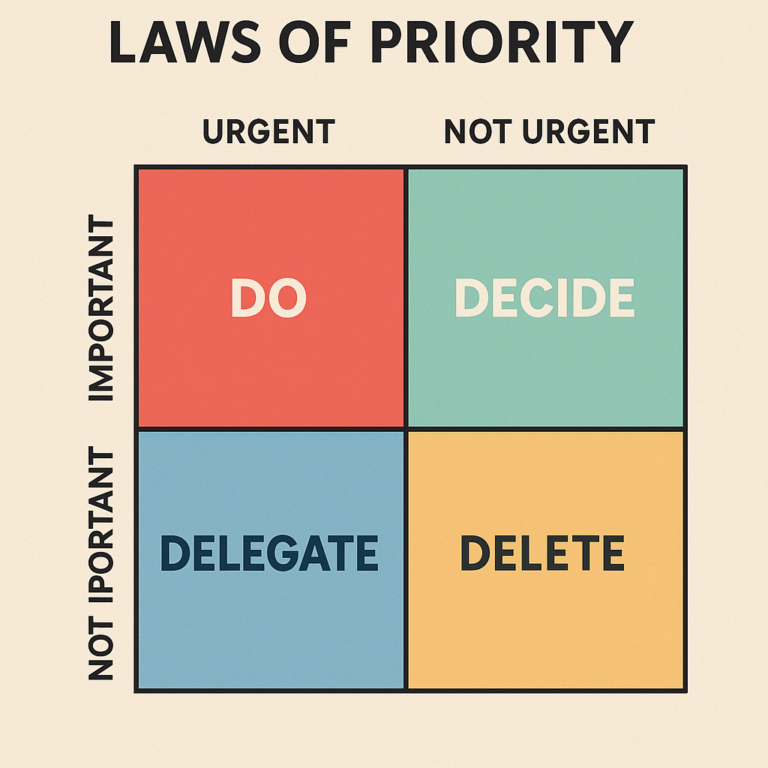
Priority identification involves distinguishing between important and urgent activities while focusing available time on high-impact objectives. The Eisenhower Matrix provides framework for categorizing activities: important and urgent, important but not urgent, urgent but not important, and neither important nor urgent. Strategic time allocation emphasizes important activities while minimizing time spent on merely urgent but unimportant tasks.
Energy management complements time management by aligning demanding activities with peak energy periods while using lower-energy times for routine tasks. Research demonstrates that cognitive capacity fluctuates predictably throughout the day, making energy optimization essential for productivity maximization. The systematic approach involves tracking energy patterns and scheduling activities accordingly.
Productivity systems provide frameworks for organizing tasks, projects, and commitments while maintaining focus on priorities. Popular systems include Getting Things Done, Time Blocking, and Pomodoro Technique, each offering different approaches to task management and focus enhancement. The strategic approach involves testing multiple systems to identify approaches that align with your working style and objectives.
Distraction elimination removes sources of interruption and attention fragmentation that reduce productivity and increase completion time for important tasks. Modern environments provide unprecedented sources of distraction through digital devices, social media, and constant connectivity. Strategic distraction management involves environmental design, technology protocols, and attention training practices.
Delegation and automation enable focus on high-value activities by transferring routine or low-skill tasks to others or systems. This requires identifying activities that can be effectively handled by others, developing systems for task transfer, and maintaining appropriate oversight without micromanagement. The strategic approach involves investing time in delegation development to free capacity for more important work.
Batch processing involves grouping similar activities together to reduce context switching and increase efficiency. Rather than handling emails throughout the day, batch processing involves designated times for email management. This principle applies to phone calls, administrative tasks, and other routine activities that benefit from concentrated attention.
Review and adjustment systems ensure continuous improvement in time management effectiveness through regular evaluation of approaches and outcomes. This involves weekly reviews of time allocation, productivity system effectiveness, and progress toward important objectives. The systematic approach treats time management as evolving skill requiring continuous refinement rather than fixed system implementation.
Rule Twelve: Legacy and Long-Term Impact
Legacy development involves creating lasting positive impact that extends beyond personal achievement to benefit others and contribute to meaningful causes. While maintaining focus on personal development, the strategic approach recognizes that sustainable satisfaction requires contribution to purposes larger than individual advancement. This aligns with research demonstrating that meaning and purpose significantly influence psychological well-being and life satisfaction.
Impact measurement involves identifying specific ways your efforts contribute to valuable outcomes for others while tracking progress over time. This requires clarity about values, identification of causes that align with your capabilities and interests, and systematic evaluation of contribution effectiveness. The strategic approach treats legacy development as long-term project requiring sustained effort rather than occasional charitable activity.
Knowledge transfer involves sharing expertise, insights, and experience with others who can benefit from your learning while continuing your impact beyond direct involvement. This includes mentoring, teaching, writing, and creating systems that preserve and transmit valuable knowledge. Research demonstrates that teaching others enhances your own understanding while creating positive impact through knowledge multiplication.
System building involves creating structures, processes, and organizations that continue producing positive outcomes without requiring your constant involvement. Rather than solely focusing on personal achievement, system building approach creates multiplier effects that extend your impact through other people’s efforts. This requires understanding organizational principles, leadership development, and sustainable system design.
Value alignment ensures that legacy efforts reflect your authentic values and priorities rather than external expectations or social pressure. This requires honest self-examination to identify what matters most to you while considering how your unique capabilities can address genuine needs. The systematic approach involves regular evaluation of legacy activities to ensure continued alignment with evolving values and circumstances.
Intergenerational impact considers how your efforts affect future generations while making decisions that balance short-term benefits with long-term consequences. This perspective influences career choices, investment decisions, environmental considerations, and social contributions. Research demonstrates that individuals who consider intergenerational impact report higher levels of meaning and life satisfaction.
Wisdom development involves synthesizing experience, knowledge, and perspective into insights that benefit others while continuing your own growth throughout life. This encompasses emotional wisdom gained through relationship experience, practical wisdom developed through overcoming challenges, and intellectual wisdom acquired through systematic learning and reflection. The strategic approach involves regular reflection on lessons learned, systematic documentation of insights, and active sharing of wisdom through appropriate channels.
Sustainable impact requires building systems and relationships that continue producing positive outcomes without requiring constant personal involvement. This involves developing other leaders, creating institutional knowledge, and establishing processes that maintain effectiveness over time. Research in organizational development demonstrates that sustainable impact requires systematic succession planning and knowledge transfer rather than individual heroic efforts.
Conclusion: The Integration of Ruthless Self-Development
The twelve rules outlined in this comprehensive framework represent interconnected principles rather than isolated strategies. Machiavelli advances an ethical system for leadership that involves uprooting corruption and establishing rule of law, which translates to personal development as eliminating internal weaknesses and establishing disciplined practices. The systematic application of these principles creates compound effects that accelerate development beyond what individual efforts could achieve.
Implementation success requires understanding that transformation involves discomfort, setbacks, and extended periods of uncertain progress. Leaders who constantly learn, especially from others, are bound to win. The key lies in maintaining long-term perspective while executing daily disciplines that support your strategic objectives. This approach demands patience, persistence, and unwavering commitment to excellence despite external pressures or internal resistance.
The modern application of Machiavellian principles to personal development offers a pragmatic framework for individuals serious about achieving their potential. Rather than relying on motivation, positive thinking, or external validation, this approach emphasizes systematic skill development, strategic thinking, and disciplined execution. Leaders who exhibit high Machiavellian traits often possess a keen sense of situational awareness and are adept at reading and manipulating social dynamics. When applied ethically to personal development, these capabilities enable more effective navigation of complex environments.
The integration of classical wisdom with contemporary research provides a robust foundation for sustained personal growth. Modern psychology validates many principles that Machiavelli observed centuries ago, particularly regarding human nature, power dynamics, and effective influence strategies. This convergence of historical insight and scientific research creates actionable frameworks that transcend temporary trends or superficial approaches.
Personal transformation through these principles requires accepting responsibility for outcomes while maintaining ethical boundaries in methods. The ruthless aspect involves uncompromising commitment to improvement, not abandoning moral considerations. For this can generally be said of men: that they are ungrateful, fickle, liars and deceivers, avoiders of danger, greedy for profit. Understanding this reality enables more effective strategies while avoiding naive assumptions about human nature.
The ultimate objective involves becoming someone capable of achieving important goals while contributing positively to others’ success. This balance between self-development and service creates sustainable satisfaction while avoiding the emptiness that accompanies purely selfish pursuits. The strongest version of yourself emerges through systematic application of these principles over extended periods, creating capabilities that serve both personal objectives and broader purposes.