
The Zettelkasten Method
In my pursuit of building a second brain, I came across the original (or known oldest) method, the Zettelkasten Method.
Zettelkasten Method Origin
The German word ‘Zettelkasten’ means ‘slip box’, created by Niklas Luhmann. Technically ‘zettel’ means slip and ‘kasten’ meaning box. The scholar used slips of paper in a box while utilizing this method managed to create no less than 70 books in a span of 30 years. This is equated to writing four books per year.
Rather than having a prefabricated hierarchy and attaching these rigid tags to his notes, he allowed the notes to construct the topics. In American public schools, note-taking is demanded, but not really constructed for the student to create and explore a method that actually helps. Luhmann created content from his notes, then as his notes were made, began to organize them based on content.
Think of it this way. Normally we are told the hierarchy before we take notes. Once we make our notes, we force them to a specific predetermined area. This is rigid, taking our time and energy to force something. Zettelkasten’s method allows you to take the notes based on the subject matter, then apply a relative tag word that makes sense to you.
As these tag words and content grow, the hierarchy structure begins to build naturally.
Method Principles
The slips created by Luhmann would contain three identifying marks. Each slip contained one main idea, organized by a combination of categories, a keyword index, and direct links between slips/cards.
You want to have each slip (note) contain one atomic idea that makes sense by itself. This is usually a note using your own words defining that idea, with a citation and combination of organized category and keyword. Eventually this growing atomic notes will develop into symbiotic new ideas, and allow you to start to see patterns.
Instead of numbering his cards in a traditional “1,2,3” sequence, the first card in Luhmann’s system might be 1, but the second card would be 1/1 if it continued the topic. The third card would be numbered 1/2, but if it only extended the idea on the second card, it would be numbered 1/1a. And so forth.

This structuring ironically is used as websites, constructing their own hierarchy based on categories, topics, and content. Due to this form of construction, current digital developers are adopting the Zettelkasten method toward their development.
Zettelkasten Workflow
The Zettekasten method can incorporate five different types of note-taking, while you create your workflow.
- Temporary Notes
- These are those ideas that pop in your head or extracting information from a book, article, podcast, video, Ect. You create the atomic note with citation, that you wish to keep and use later.
- Literature Notes
- Here you take your temporary notes and expand on them, into a paragraph. What is important here is to create writing for the future self. Ideally, this note should be very clear, as you will not recall it in the future
- Permanent Notes
- Taking the note further, you want to incorporate your own ideas. Here you expand it to your own thoughts, interest, and add keywords based on the content.
- Index Notes
- These are permanent notes linked together on one slip or note. You are combining these notes by chronology, topics, keywords, Ect. Where Luhmann used physical notecards, filed in an index, today we can digitize this method to assist us.
Digitized Slip Notes
While there are many applications, tools, and resources for digitizing your notes, I have come to primarily use Notion. I am in the process of importing my notes, thoughts, and lexicon into Notion. This will be an ongoing process, and I am sure as time goes, changes and improvements will be made.
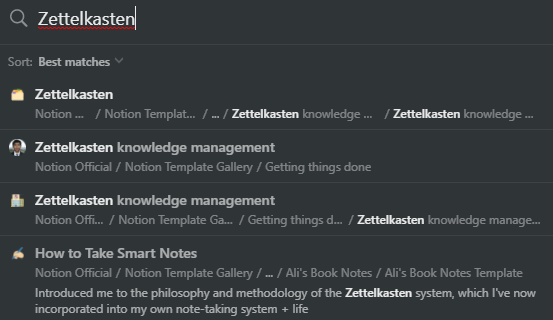
A quick search on Zettelkasten and you can see free templates for Notion are already in play. I am not really surprised. Notion allows you to utilize templates to get started, then massage it to your needs.
In this older article, I have already been looking at Tiago Forte’s idea toward a second brain. Only recently, have I been provided the time to really begin building it. I can see utilizing the Zettelkasten Method combined with Notion to really utilize a solid note-taking platform.

Matt Cole has high regard for knowledge share. He has a desire to share critical thinking and information. With a Masters in Information Technology and a wide array of certifications, while not working full-time, he wishes to knowledge share through providing insight, information organization, and critical thinking skills.
#KnowledgeShare | Matt Cole | #infobyMattCole