Inductive and Deductive Reasoning
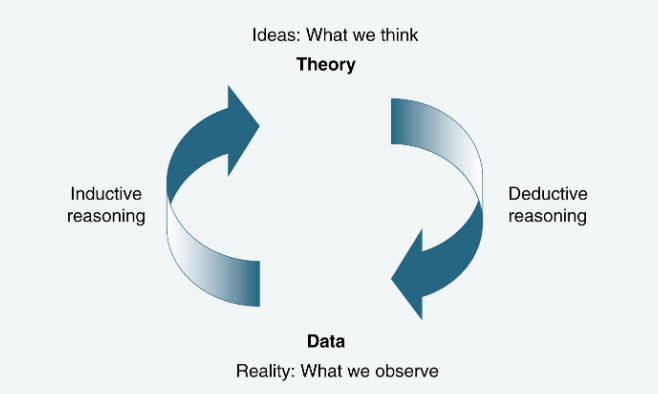
There are two fundamental logical processes accepted. These are the inductive reasoning and deductive reasoning. One form of reasoning can be acquired from the other.
Inductive Reasoning
You can define inductive reasoning as a method bringing broad generalization through specific observations. More importantly, repeated experimentation and testing provides the same results. When this repeated outcome becomes consistent, we can garner it as fact. If particular facts are shown to be true time after time, or if a laboratory experiment yields the same result each time it is run, or if people in a wide and varied sampling respond the same way to a given question, then a general conclusion can be drawn. The Scientific Method draws its results through inductive reasoning. I provide a online course on Scientific Method.
Example of Inductive Reasoning: Ten individuals perform the same experiment with the same conditions. Each purchase a liter of soda from the store. Each then pours the soda into a measuring cup to see if it truly is a liter. All show the soda is a liter. This inductive reasoning can equate a liter of soda purchased truly contains a liter. Based on the findings, it is a fact.
This allows for the individual to test, validate, and come to the same results.
Deductive Reasoning
Deductive reasoning proceeds from the general (broad) to the particular (specific). When a general conclusion is made, we can find additional facts, based off the general conclusion. This validity is dependent on the truth or initial conclusion met. Deductive reasoning relies on inductive reasoning, and for those facts to be accurate.
Example of Deductive Reasoning: Since the ten individuals proves the one liter container contains the correct amount, they can use that container as measurement for one liter. The initial fact can be attributed to another fact. Keep in mind, if the initial fact is inaccurate, the deductive reasoning will be false.
Summary – Inductive Deductive
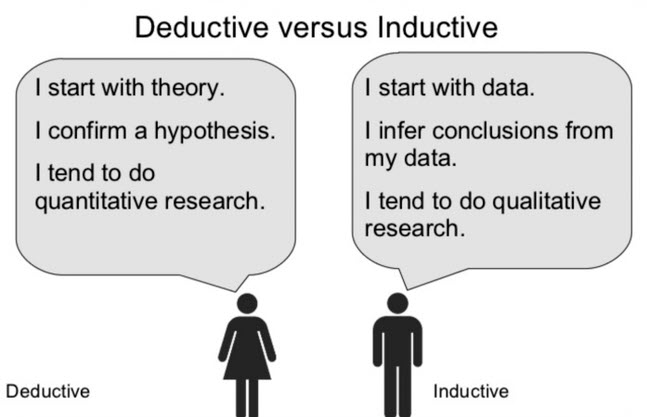
In summary inductive reasoning is the method to acquire the same results from repetitive experiments. This can then be equated as fact. Deductive reasoning looks at the broad fact and from there deem other possible facts.

Matt Cole has high regard for knowledge share. He has a desire to share critical thinking and information. With a Masters in Information Technology and a wide array of certifications, while not working full-time, he wishes to knowledge share through providing insight, information organization, and critical thinking skills.
#KnowledgeShare | Matt Cole | #infobyMattCole