
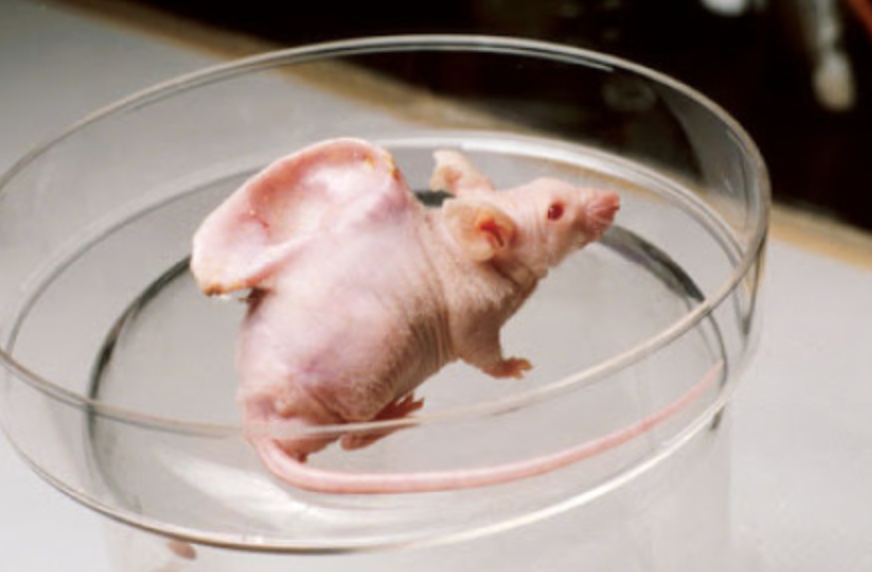
Mixing Genes – Genetic Manipulation
Entertainment through movies has portrayed the possibility of mixing human and animal genetics. This is either done to improve the human body[ IE Transhumanism ](Superheros) or horrific results (The Fly).
Today, this is not reserved only on the screens. The term is chimaera. By definition, a chimaera is an organism that contains at least two sets of DNA. To create a chimaera, researchers inject stem cells from one organism into a mutant strain of a different organism.
Japan
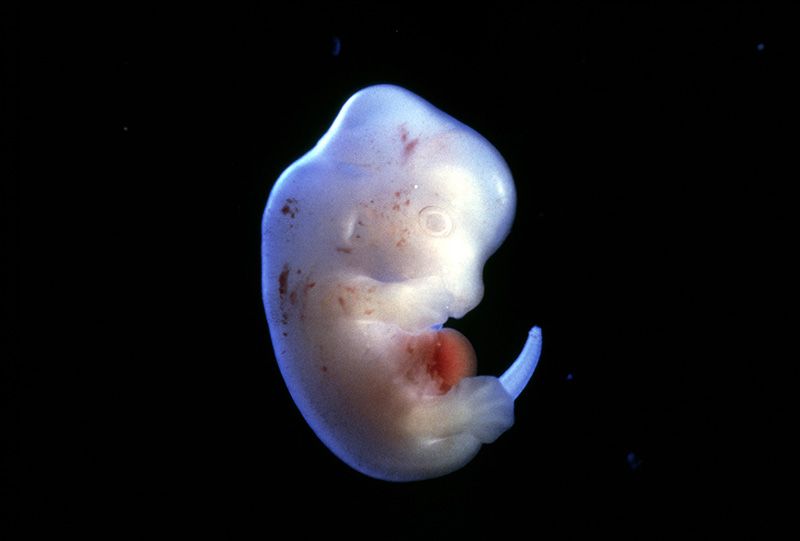
Japan received the OK to create human-animal hybrids. Japan’s stem-cell scientists will officially receive government support. Since March 2019, it was forbidden to grow animal embryos containing human cells beyond 14 days, or transplant such embryos into a surrogate uterus. That has changed.
Hiromitsu Nakauchi, who leads teams at the University of Tokyo and Stanford University in California, plans to grow human cells in mouse and rat embryos and then transplant those embryos into surrogate animals.
Source
This attempt to fuse human with animal cells has been going on for years, already. Nakauchi and colleagues announced at the 2018 American Association for the Advancement of Science meeting in Austin, Texas, that they had put human iPS cells into sheep embryos that had been engineered not to produce a pancreas. But the hybrid embryos, grown for 28 days, contained very few human cells, and nothing resembling organs. This is probably because of the genetic distance between humans and sheep, says Nakauchi.
This same workings are occurring in all countries including United States.
According to Jun Wu, who researches human–animal chimaeras at the University of Texas Southwestern Medical Center in Dallas, It doesn’t make sense to bring human–animal hybrid embryos to term using evolutionarily distant species such as pigs and sheep because the human cells will be eliminated from host embryos early on.
China
A secret lab in China is making human-monkey chimeras. This was done to circumvent legal issues in US and Spain. This fruition came into being back in 2017.
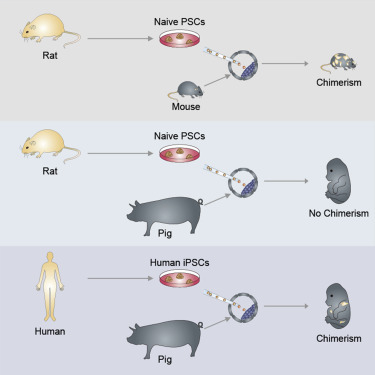
We used two chimeric-competent rat ESC lines, DAC2 and DAC8 (Li et al., 2008). We labeled both lines with a fluorescent marker, humanized kusabira orange (hKO), for cell tracking and injected them into mouse blastocysts. Following embryo transfer (ET) into surrogate mouse mothers, both DAC2 and DAC8 lines gave rise to live rat-mouse chimeras.
China also has experimented heavily mixing human genes (intelligence related) into macaque monkeys.
In 2014, scientists created mice with human astrocyte cells—non-neuronal brain cells that make up over half the brain and bolster neural signaling. Compared to mouse astrocytes, humans are up to 20 times larger and carry 100 times more connections, meaning that they can better coordinate the brain’s signals for processing information. The hybrids were smarter: when challenged with a standard memory test they performed at least four times better than normal mice, a “whopping effect.”
Source
Ethical Side of it
Doctor Ángel Raya, the director of the Barcelona Regenerative Medicine Center, explains that experiments with chimeras face “ethical barriers.” “What happens if the stem cells escape and form human neurons in the brain of the animal? Would it have consciousness? And what happens if these stem cells turn into sperm cells?” he asks.
The red line has always been at 14 days gestation. That red line has effectively been moved. I wrote about the ethical side of Xenobots earlier this week. You can read that article titled, Ehical View: Xenobots.
To read my view on the genesis of these experiments, jump over to my article, The True Source of Chimeras .

Matt Cole has high regard for knowledge share. He has a desire to share critical thinking and information. With a Masters in Information Technology and a wide array of certifications, while not working full-time, he wishes to knowledge share through providing insight, information organization, and critical thinking skills.
#KnowledgeShare | Matt Cole | #infobyMattCole