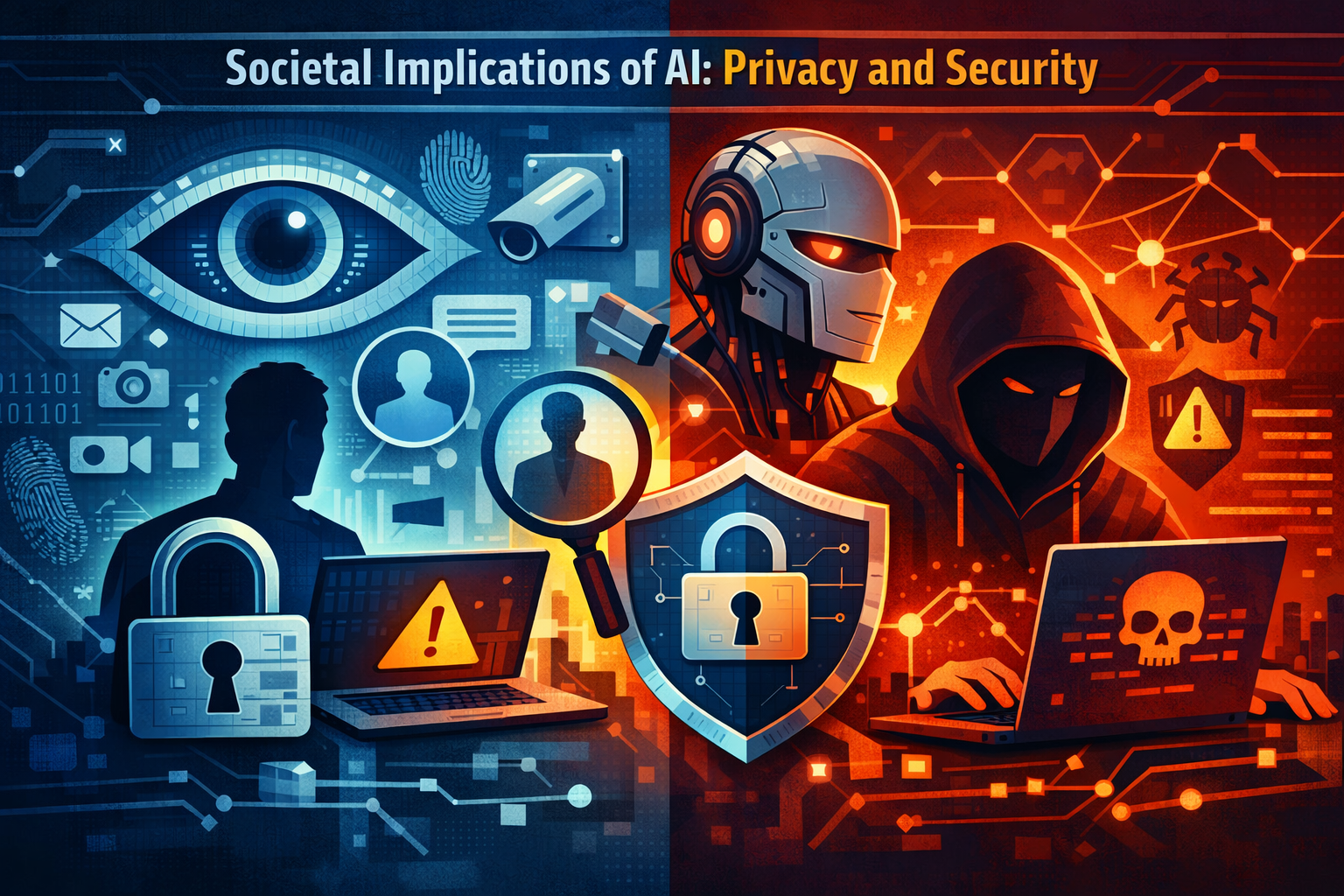
The Double-Edged Sword: Navigating the Societal Implications of Adaptive AI Systems
—
The rapid proliferation of Artificial Intelligence (AI) is reshaping our world at an unprecedented pace, moving beyond simple automation to increasingly complex adaptive systems. These systems, capable of learning and evolving based on data input, offer incredible potential for innovation across numerous sectors – from healthcare and finance to transportation and entertainment. However, this advancement isn’t without its challenges; understanding the societal implications of AI technologies, particularly concerning privacy and security, is crucial for both developers and end-users alike. The Oklahoma Academic Standard L1.ET.AI.03 directly addresses this need, prompting students to critically evaluate these impacts, ensuring they become informed citizens in an increasingly AI-driven world. This evaluation requires a nuanced understanding of how data is collected, used, and protected within the context of adaptive AI systems, moving beyond simply using the technology to questioning its broader effects on society.
Want a free Oklahoma CS lesson?
Privacy concerns are arguably at the forefront of the societal implications debate surrounding AI. Adaptive AI systems thrive on data – the more data they have, the better they become at predicting behavior, personalizing experiences, and making informed decisions. This constant collection of data, often without explicit user consent or full understanding, raises questions about who owns this information, how it’s being used, and what safeguards are in place to prevent misuse. Consider facial recognition technology, now commonplace in security systems and social media platforms; while convenient, it also creates a digital trail of our movements and interactions, potentially leading to surveillance and profiling. The implications extend beyond simple tracking – data breaches can expose sensitive personal information, impacting everything from credit scores to employment opportunities, highlighting the need for robust data protection measures within these AI systems. This is where understanding algorithmic transparency becomes key; knowing how an AI arrives at a conclusion helps us assess its fairness and potential biases.
Security concerns are inextricably linked to privacy in the age of adaptive AI. As AI systems become more integrated into critical infrastructure – power grids, financial markets, transportation networks – they also become increasingly attractive targets for cyberattacks. A compromised AI system can have cascading effects, disrupting services, causing economic losses, and even endangering lives. Unlike traditional software vulnerabilities, attacks on AI systems can be particularly insidious because the AI itself learns and adapts, potentially making it harder to detect and contain breaches. Furthermore, adversarial machine learning – where attackers intentionally manipulate data to “fool” the AI – presents a unique security challenge, requiring constant vigilance and innovative defense strategies. The complexity of these adaptive systems means that traditional cybersecurity measures may not always be sufficient, demanding new approaches tailored specifically for AI environments.
One excellent resource for exploring these concepts with high school students is the High School Computer Science: Adaptive AI Systems Unit – L2.ET.AI.03 Aligned available on Teachers Pay Teachers (Resource). This unit provides a comprehensive framework for teaching students about adaptive AI, including its applications, benefits, and potential drawbacks. It’s specifically aligned to Oklahoma Academic Standard L1.ET.AI.03, making it an ideal resource for educators in the state looking to integrate AI into their curriculum. The unit encourages critical thinking through hands-on activities and real-world examples, helping students develop a deeper understanding of how AI impacts our lives.
The issue of algorithmic bias is another crucial societal implication that deserves careful consideration. AI systems are only as good as the data they’re trained on; if that data reflects existing societal biases – whether based on gender, race, or socioeconomic status – the AI will likely perpetuate and even amplify those biases in its decision-making process. This can lead to unfair or discriminatory outcomes in areas like loan applications, hiring processes, and even criminal justice. For example, facial recognition systems have been shown to be less accurate at identifying people of color, potentially leading to misidentification and wrongful accusations. Addressing algorithmic bias requires careful data curation, diverse training datasets, and ongoing monitoring to ensure fairness and equity within AI systems. It’s not enough to simply have an AI; we need to understand how it’s making decisions and whether those decisions are just.
Beyond privacy, security, and bias, the societal implications of AI extend to broader economic and workforce considerations. As AI-powered automation becomes more prevalent, many jobs currently performed by humans may be displaced, requiring workers to adapt and acquire new skills. While some argue that AI will create new job opportunities, the transition may not be seamless, potentially leading to increased unemployment and income inequality. This necessitates proactive strategies for workforce development, including investing in education and training programs focused on AI-related fields. Furthermore, we need to consider the ethical implications of delegating decision-making authority to machines – particularly in areas where human judgment and empathy are essential. The future of work will undoubtedly be shaped by AI, but it’s up to us to ensure that this transformation benefits everyone.
Ultimately, navigating the societal implications of adaptive AI systems requires a multi-faceted approach involving collaboration between technologists, policymakers, ethicists, and citizens. We need to develop robust regulatory frameworks that protect privacy, enhance security, and promote fairness in AI applications. We also need to foster greater public awareness and understanding of AI technologies, empowering individuals to make informed decisions about how they interact with these systems. The High School Computer Science: Adaptive AI Systems Unit – L2.ET.AI.03 Aligned provides a solid foundation for students to begin this exploration, equipping them with the knowledge and skills necessary to become active participants in shaping the future of AI. By embracing critical thinking and fostering a spirit of inquiry, we can harness the power of AI while mitigating its risks, creating a more equitable and sustainable future for all.
For a full resource on all Oklahoma Academic Standards involving AI: [Resource]