
Decline Reading Proficiency Continues for Kids

It is estimated that 67% of fourth-grade students do not read proficiently at their grade level. Only one-third of high school seniors are considered proficient readers, and only 4% of seniors reached the highest level of advanced proficiency in reading on a recent test.

In fact, only 39% of teacher preparation programs across the nation are actually teaching the concepts and strategies of effective reading instruction. (Source)

This review is prior to the COVID19 issue.

Help Your Kids in Reading

One good thing, coming from forced stay-at-home, many parents have directly seen their kids’ abilities, involving the school teachings. This is at least one saving grace.

With this ongoing public health crisis caused by the coronavirus pandemic, parents are concerned to send their kids back to school, while the schools wrestle with reopening.

“Obviously, this is a challenging time for everybody, with choices that we haven’t had before and ways of doing things that we haven’t done before,”

said FCPS Superintendent Scott Brabrand.

Personally, in my observation, all schools are struggling these uncharted waters. Their infrastructure is not setup for true online learning, coupled with teachers not prepared.

This is a grave concern considering such low proficiency before this disruption.

What Can A Parent Do?

I came across these suggestions. You may also be interested in finding out Best Way to Learn Critical Thinking.

  • The parent teaches reading. Be a mentor for your child.
  • Talk to your kids and use big words. Don’t be afraid to speak intelligently.
  • Read to your kids and have them read to you.
  • Have your kids tell you a story.
  • Teach phonics and be phonemic aware.
  • Promote writing.
  • Ask questions after your child reads. This will ensure they are thinking about what they are reading.
Matt Cole has high regard for knowledge share. He has a desire to share critical thinking and information. With a Masters in Information Technology and a wide array of certifications, while not working full-time, he wishes to knowledge share through providing insight, information organization, and critical thinking skills.

#KnowledgeShare | Matt Cole | #infobyMattCole
Similar Posts

  • Proximate Cause

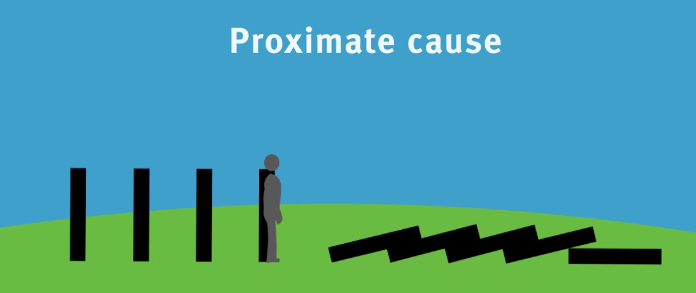
    Reading Nir Eyal book, #Indistractible , the term proximate causes is discussed in chapter three. By definition, proximate cause is “an event which is closest to, or immediately responsible for causing, some observed result.” This is also known as a distal (away from the center/outer part) cause. In other words, it is observed and at first…

  • Is it a Disorder?

    is it a Disorder? If you take a child out of the environment that they’re being unsuccessful in and you put them in another environment and they’re able to be successful. Is it actually a disorder? Kathleen Lockyer Tweet Listen to the Episode Many may not know, but myself and family members suffer from ADHD…

  • Exclusive Interview: Betty Simons – Fearless PI Rescuing Missing Children

    Betty Simons is a tenacious private investigator, specializing in recovering missing children and combating human trafficking, co-founding the non-profit NMA in memory of her sister and achieving an astonishing 44 out of 45 successful recoveries. The interview with Betty Simons was done by V4CR Kim Kelley. I was able to personally watch the live discussion…

  • The Power of Numbers

    Numbers in and of themselves are a funny thing. They are not a physical item to touch, consume or object. However, we can definitely feel the impact of numbers. Consider the difference of having 5 100’s compared to 5 1’s. We use numbers as mathematical objects to count, measure, and label. These representive symbols are…

  • Root Cause

    In project planning, it is important to identify the root cause of problems or issues that arise during the course of the project. The root cause is the underlying reason or source of a problem, rather than just the symptoms. Identifying the root cause is an important step in creating a project plan that is…

  • Quality control

    Quality control is a critical aspect of project planning, ensuring that deliverables meet the required quality standards. Quality control involves the processes used to ensure that the project meets the quality standards set for it. In this article, we will discuss the key elements of quality control in project planning, its importance, and best practices…